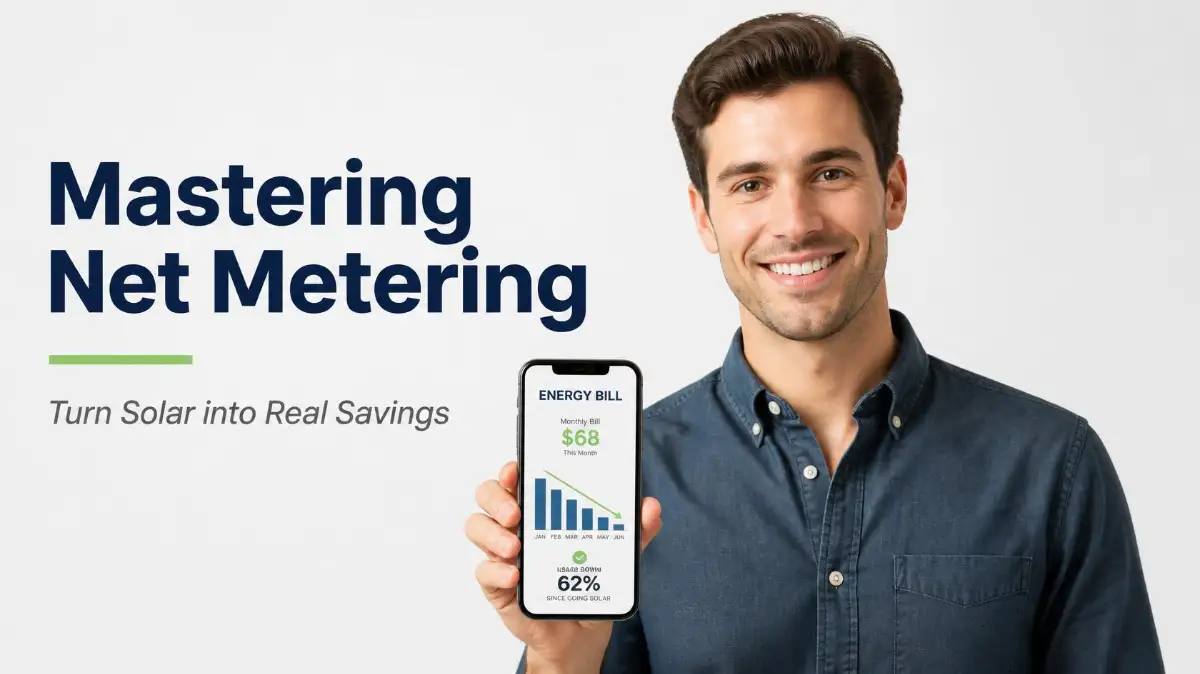
The Heavy Burden of Rising Electricity Costs
Do you feel a sense of dread every time the mail arrives with your monthly energy bill? You are not alone in this feeling. Many families are watching their hard-earned money disappear into the pockets of utility companies.
The cost of living is going up, and power prices seem to lead the way. You might have tried turning off lights or using the AC less, but the bill stays high. It feels like a trap that you can never escape.
I remember the exact moment I hit my breaking point with my electricity bill last summer. I opened the envelope, saw a number that was almost as high as my car payment, and just sat at my kitchen table feeling completely defeated. I was already turning off the AC and sweating in my own living room, yet my bills just kept climbing higher and higher every single month.
This constant financial pressure creates a lot of stress at home. You want to provide comfort for your family, but the high price of basic electricity makes it hard. It is a daily struggle that many people face in silence.
Why Most People Fail to Solve Their Energy Problems
Many homeowners try to fix their high bills but end up disappointed. Here are a few reasons why the struggle continues:
- Misleading Information: There is a lot of bad advice online about how to save energy that just doesn't work.
- Lack of Clear Guidance: People hear about solar power but don't understand the actual mechanics behind the savings.
- Initial Cost Fear: Many think solar is too expensive without realizing how the system pays for itself.
- Missing the "Banking" Concept: Most folks don't know they can "bank" their extra power for later use.
- Complex Paperwork: The fear of dealing with utility companies and their rules stops people from taking action.
When you don't have the right facts, you make choices based on fear. This often leads to doing nothing at all, which is the most expensive choice of all.
The Mental Toll of High Power Bills
Living with high utility costs does more than just hurt your wallet. It actually affects your mental peace and your confidence as a homeowner.
- Constant Worry: You find yourself checking the meter or the thermostat every few hours, which is exhausting.
- Feeling Powerless: It feels like the big energy companies have all the control over your life.
- Reduced Quality of Life: You might stop hosting friends or family because you are worried about the extra energy use.
- Loss of Confidence: When you can't control a basic household expense, it makes you feel like you are losing your grip on your finances.
You deserve to feel secure and in control of your home. Understanding the right technology can give you back that peace of mind.
The Truth About the Solar Energy Gap
The biggest problem with solar power used to be a simple timing issue. Your panels produce the most power during the middle of the day. This is exactly when the sun is brightest.
However, most people are not at home during the day. You are at work, and the kids are at school. Your house is quiet, and your energy use is very low. This means your solar panels are making lots of power that you aren't using.
When evening comes, you return home. You turn on the lights, cook dinner, and watch TV. This is when you need the most power. But guess what? The sun is down, and your panels are not producing anything.
In the old days, that extra daytime power was simply wasted. You had to buy expensive batteries to store it. If you didn't have batteries, you had to buy power from the grid at night.
This gap between when power is made and when it is used kept people from seeing real savings. It made solar seem like a hobby rather than a smart financial move. This is exactly where the concept of net metering enters the picture to change everything.
How Net Metering Becomes Your Personal Energy Bank
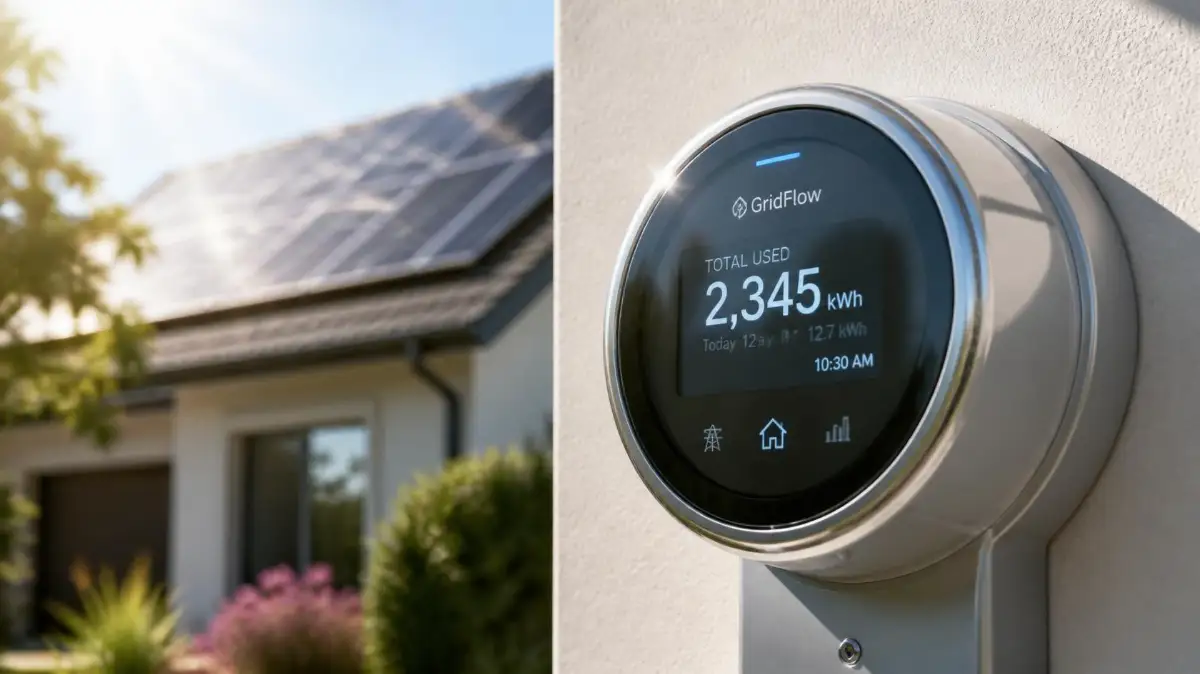
Net metering is the system that bridges the gap between day and night energy use. Think of it as a savings account for your electricity. You don't need a physical battery in your garage to store energy anymore. Instead, the utility grid acts as your giant battery.
When your solar panels make more power than you need, the extra goes back to the grid. The power company tracks this. They give you credits for every kilowatt-hour (kWh) you send them. It is a simple, fair exchange.
If you are still a little confused about how power flows back and forth to the city grid, check out this short video below that perfectly explains the magic of net metering! Watch it quickly, and then keep reading to learn the simple daily habits that will double your total savings.
Step 1: The Magic of the Bi-Directional Meter
The first thing you need to understand is the bi-directional meter. A standard meter only counts how much power you take from the grid. It only moves in one direction—up. This means your bill only goes up.
A bi-directional meter is different. It can spin in both directions. When you use grid power, it moves forward. When your solar panels send power back to the grid, the meter literally spins backward.
This is not a trick or a glitch. It is a designed feature. By the end of the month, the utility company looks at the "net" total. If you used 500 units and sent back 400 units, you only pay for 100 units.
Step 2: Sending Your Surplus Power to the Community
During the sunny hours, your home becomes a tiny power plant. You are producing clean, green energy. Since you aren't using all of it, that power flows out of your house.
It goes through your meter and out to the power lines on your street. Your neighbors might actually be using the power your panels created to run their fans or TVs. You are helping the community and the planet at the same time .
The best part is that you are not giving this power away for free. The utility company is required to track this "outflow." In many places, they must give you a one-to-one credit. This means a unit of power you give them is worth exactly the same as a unit they sell you.
Step 3: Drawing from Your Credits at Night
When the sun sets, your panels take a break. This is when you start using the grid again. But you aren't "buying" power yet. First, you start using up the credits you earned during the day.
If you made 20 units of extra power during the day, you can use 20 units at night for free. This balance allows you to have a $0 energy charge if your system is sized correctly.
You are essentially using the grid to store your value. This eliminates the need for expensive home batteries for many people. It makes the transition to solar much more affordable and logical for the average family.
Why Net Metering Is Fair for Everyone
Some people wonder why utility companies agree to this. The truth is, it helps them too. When many homes have solar, it reduces the strain on the main power plants during the day.
It also means the power company doesn't have to build as many new power lines. The energy is being made and used right in the same neighborhood. This is very efficient.
For you, it means your monthly bill becomes predictable. You no longer have to worry about a heatwave causing your bill to double. As long as the sun is shining, you are earning credits to cover your needs.
Common Myths About Net Metering
There are many stories out there that might confuse you. Let's clear some of them up right now.
Myth: You won't get a bill at all.
Reality: You will still get a bill, but it might only show a small "connection fee." This fee keeps you connected to the grid for safety and backup. However, your actual energy usage charge can hit zero.
Myth: The power company pays you cash every month.
Reality: Usually, they give you credits on your account. These credits roll over to the next month. If you have a lot of extra credits at the end of the year, some companies might send a check, but most just keep them as a balance for you.
Myth: If the grid goes down, you still have power.
Reality: For safety reasons, most grid-tied solar systems shut off during a blackout. This is to protect the workers fixing the lines. If you want power during a blackout, you would then need a small battery backup or a special inverter.
A Real-Life Example of Savings
Imagine a family named the Johnsons. Before solar, they paid $200 every month for electricity. They decided to install a solar system that fits their roof.
In a typical summer month, their panels produce $250 worth of electricity. Since they are at work during the day, they only use $50 of that power directly. The other $200 worth of power goes back to the grid.
At night, they use $100 worth of power from the grid. Because they have $200 in credits from the daytime, their nighttime use is completely covered. They still have $100 in credits left over!
Their bill for that month shows $0 for energy use. They only pay a $15 connection fee. They saved $185 in just one month. Over a year, this adds up to thousands of dollars.
Understanding the Policy in Your Area
Net metering rules can change depending on where you live. Some places use a system called Net Billing. This is slightly different because the credit might be a little less than the retail price.
However, even with net billing, the savings are still very high. It is always a good idea to check with a local expert to see the exact rules for your town. Most solar installers handle this paperwork for you.
They will show you a chart of how much you can expect to save over the next ten or twenty years. When you see those numbers, you realize that solar isn't an expense. It is a way to stop a monthly leak in your budget.
How to Get Started with Net Metering
If you want to lower your bill, the first step is a home energy audit. See how much power you use during the day versus the night. This helps you size your solar system perfectly.
You don't want a system that is too small, or you will still have a bill. You also don't want a system that is way too big, as you might make more power than the utility company will credit you for.
Finding the sweet spot is the key to the best return on your investment. Once your system is installed and the bi-directional meter is in place, you can sit back and watch the savings grow.
The Scientific Logic Behind the Savings
The physics of electricity is very simple. Power always takes the path of least resistance. When your panels make power, it first goes to your fridge or lights. If they don't need it, the power moves out to the grid.
This happens instantly. There are no moving parts to break and no complicated switches for you to flip. It is a silent, automatic way to build wealth. By using the grid as a buffer, you are taking advantage of a highly efficient machine.
The logic is clear: Why pay for something you can produce yourself? We don't pay for the air we breathe or the sunlight that hits our skin. Net metering allows us to capture that sunlight and turn it into a financial asset.
Final Thoughts on Your Energy Future
The world is moving toward cleaner energy. Net metering is the bridge that makes this possible for ordinary families. It removes the mystery and the high cost of energy storage.
You have the power to change your financial story. You don't have to be a victim of rising utility rates anymore. By understanding net metering, you are taking the first step toward true energy independence.
Your home can be more than just a place to live. It can be a source of income and a shield against inflation. Start looking at your roof as a gold mine of potential savings. The sun is shining—it's time to start catching it.
Maximizing Your Solar Gains: Beyond the Basics
Once you have your solar panels running, the real work of optimizing your return begins. You are now a micro-producer of energy, and small changes in your habits can lead to massive differences in your annual savings.
Think of your home as a small business. You want to align your heavy energy consumption with the peak production hours of your solar system. This is the secret to maximizing your self-consumption and minimizing your reliance on the grid.
Shifting Your Habits to Match the Sun
Most people run their high-energy appliances in the evening when they return from work. By then, the sun is low, and your panels are likely resting. You should aim to shift these tasks to the middle of the day.
If you have a dishwasher, a washing machine, or an electric dryer, try to run them between 10:00 AM and 3:00 PM. Many modern appliances have delay-start timers that make this easy to manage. You can load them in the morning and let them run while you are at work .
I actually made a huge mistake when I first got my panels by running my heavy appliances at 8 PM, which totally ruined my solar savings. Once I figured out how to use my washing machine's delay timer so it would run exactly at noon when the sun was brightest, my monthly bill finally dropped to zero.
This strategy ensures that the power you use is "fresh" from your panels. You are effectively powering your home for free using direct sunlight. This is a much better financial move than exporting energy and buying it back later.
Investing in Energy Efficiency for Better Returns
Your solar panels only produce so much power. If you waste energy, you are essentially throwing money away. An energy-efficient home requires fewer solar panels and generates more net credits.
Start by replacing all your old light bulbs with LEDs. They use a fraction of the power and last much longer. Next, check your home for "energy vampires"—devices that stay on standby mode and drain power when not in use.
You can learn more about managing your personal budget by tracking these small but significant household expenses. When you combine energy-conscious habits with solar power, your financial growth accelerates. It is the same mindset used for mastering health policy deductibles where small adjustments prevent large out-of-pocket costs later.
Monitoring Your Production Performance
You should get into the habit of checking your solar inverter app weekly. This tells you exactly how much power your system is generating. If you notice a sudden drop in production, it might be time to clean your panels.
Dust, pollen, and debris can block sunlight and reduce efficiency by a significant margin. A simple rinse with a garden hose can often restore your system's performance instantly. Keeping your panels clean is a pro-level secret that most homeowners overlook.
Pitfalls That Drain Your Solar Savings
Even the best systems can underperform if you fall into common traps. Avoiding these mistakes is just as important as the installation itself.
- Ignoring Shading Issues: Even a small amount of shade from a new tree branch can cripple a solar panel's output. Keep trees trimmed to ensure maximum sunlight exposure throughout the day.
- Assuming All Credits are Equal: Some utility companies apply different rates for peak and off-peak hours. Always read your specific energy contract to see if your buy-back rate changes at night.
- Overlooking System Warranties: Your solar hardware has a lifespan. If your monitoring app shows a constant error, address it immediately under warranty rather than waiting for it to fail completely.
- Neglecting Property Insurance: Adding solar panels changes the value and profile of your home. Ensure your homeowner’s insurance covers your system in case of storms or accidents.
- Failing to Track Utility Statements: Mistakes happen in billing. Review your statements every few months to ensure you are receiving the credits you have earned.
If you ignore these warnings, you might find that your bills remain higher than expected. Protecting your asset is the only way to ensure the long-term benefits you were promised.
Your Path to Energy Independence
You are now equipped with the knowledge to take full control of your electricity consumption. Solar energy and net metering are not just trends; they are the standard for modern, responsible home management.
Think of your solar journey as a long-term investment in your future. Just like protecting your digital assets requires consistent vigilance, managing your home energy requires a proactive mindset. You have the tools, the logic, and the strategy to lower your bills permanently.
Action Plan for Tomorrow
Start by taking a close look at your last three electricity bills. Identify the exact number of kilowatt-hours you consume daily. Use this number as your goal for your solar system performance.
Next, identify the two most energy-hungry appliances in your home. Create a schedule to ensure they only run during peak sunlight hours. This simple change will provide immediate gratification as you watch your meter slow down.
The transition to a cleaner, cheaper energy future begins today. You have already done the hard part by seeking the truth. Now, go take that first step and start making the most of every sunbeam that hits your roof.
Looking back, taking the time to understand my own energy usage was one of the smartest financial moves I have ever made for my family. Do not let the fear of confusing utility rules stop you from keeping your money in your pocket. Grab your latest power bill today and start planning your escape from those crazy rate hikes—you absolutely have the power to fix this!
Disclaimer: This content is for informational purposes only. Electricity regulations, net metering policies, and solar energy laws vary significantly by location and utility provider. Always consult with a local professional or your utility company to understand the specific rules applicable to your residence before making hardware investments.
***THANK YOU***