The Excitement of a New EV vs. The Garage Reality
Bringing a shiny new electric car home is an amazing feeling. The silent drive, the smooth acceleration, and the modern technology make you feel completely futuristic. But then you finally park in your driveway.
You look at a standard wall outlet in your home. You look back at your high-tech car. Suddenly, a wave of panic hits you.
How exactly are you supposed to power up a massive battery with the same plug you use for a vacuum cleaner? This is the exact moment the dream of owning an electric vehicle turns into a stressful, confusing reality.
I still remember bringing my first electric car home and staring blankly at my standard garage wall outlet. I plugged it in, checked the dashboard, and my stomach dropped when I realized it would take three full days to charge! My futuristic dream instantly turned into a nightmare of panic, making me realize I was completely unprepared for the reality of electric driving.
Many new owners face this sudden shock, realizing their home is completely unprepared for heavy-duty charging needs.
Why Most Homeowners Fail at Their First Setup
People naturally turn to the internet for quick answers when they feel stuck. But this usually leads to even more confusion and expensive mistakes.
- Listening to random forums: Every single house has a completely unique electrical system. What worked for a random person online might instantly overload your specific home panel.
- Ignoring power limits: Many folks assume they can just plug a high-speed charger into any old garage outlet. This often leads to blown fuses, tripped breakers, or even melted wires.
- Buying the wrong equipment: Purchasing a cheap, uncertified charging unit online can create severe fire risks for your entire family.
- Skipping professional advice: Trying to save a few dollars by doing DIY electrical work often results in highly expensive repairs later down the road.
The Hidden Toll on Your Peace of Mind
This lack of clear, actionable information does more than just delay your charging station setup. It actually drains your mental energy on a daily basis.
- Constant range anxiety: Knowing your home setup is unreliable makes every drive feel stressful. You constantly watch the battery meter instead of enjoying the ride.
- Fear of home safety: Going to sleep while a heavy-duty appliance draws maximum power from an outdated electrical panel is an incredibly terrifying thought.
- Financial uncertainty: Hearing horror stories about massive electrician bills makes you afraid to even start the preparation process.
- Regret and frustration: Instead of enjoying your beautiful new car, you start wondering if buying an electric vehicle was actually a massive mistake.
You are definitely not alone in feeling this way. I talk to new electric vehicle owners every single day who feel completely stuck. They want to do things the right way, but the technical jargon feels overwhelming.
Words like "amps," "volts," and "load calculations" sound like a completely foreign language. The truth is, preparing your space for an electric vehicle charging station should not require an engineering degree.
When you break the entire process down into simple, logical pieces, it becomes highly manageable. Think of your home electrical system exactly like the plumbing in your house.
If you try to force a massive amount of water through a tiny pipe, the pipe will burst. Electricity works in a very similar way. Your primary goal is simply to make sure the "pipes" in your walls are big enough to handle the massive flow of energy your car needs.
By understanding a few basic facts, you can easily take back control of your garage space. You can confidently plan a safe, efficient, and reliable home setup today.
Getting Your Space Ready: The Complete Educational Breakdown
To stop the confusion and get your electric vehicle charging station running safely, we need to follow a logical path. We will start from the electrical source and work our way straight to your car.
Here are the most practical, scientifically sound steps you can apply to your home right now.
Understanding Your Current Electrical Capacity
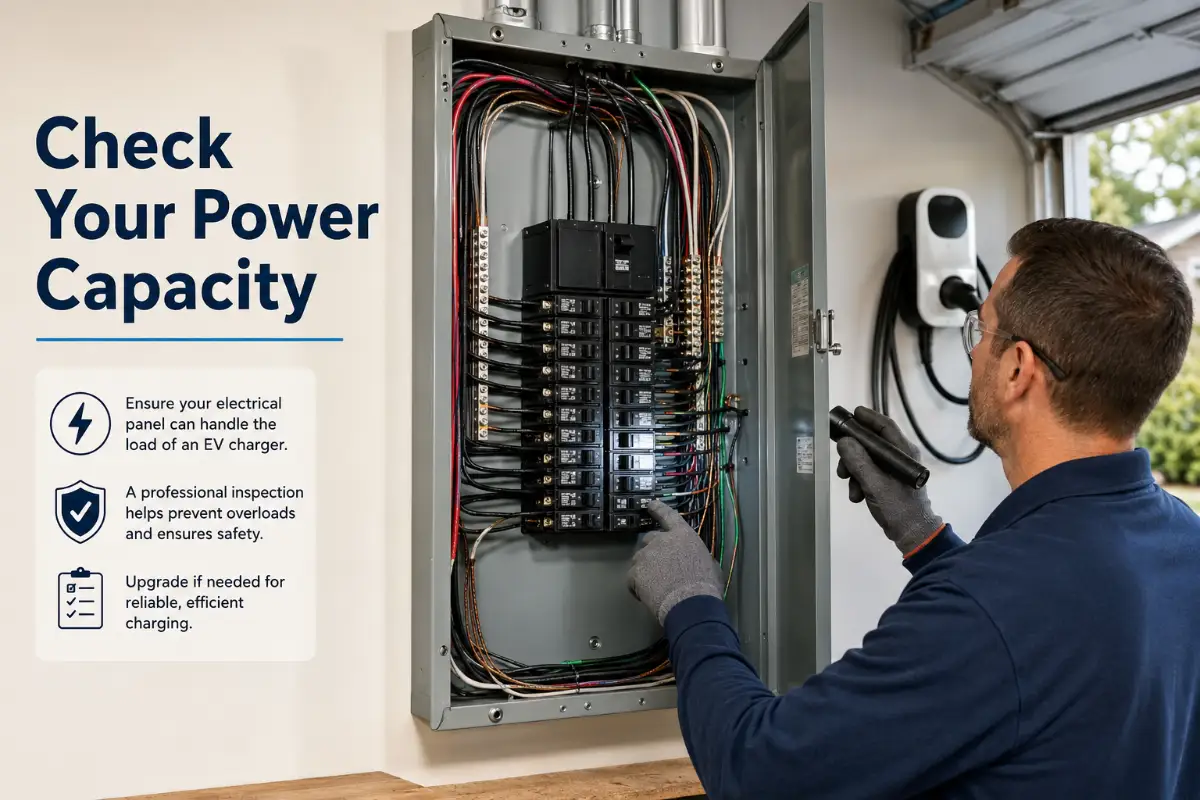
Before you buy any equipment or hire a professional, you need to know exactly what you are working with. Your home electrical panel is the beating heart of your entire power system.
If you open the gray metal box in your garage or basement, you will see a main breaker switch at the very top. This main switch usually has a large number stamped on it. You might see numbers like 100, 150, or 200.
This specific number represents the total amperage your home can safely handle at one single time .
If you have never opened your home electrical panel before and feel a bit nervous, watch this quick video to see exactly where to find your main amp number, and then keep reading to learn how to choose the perfect charger for your daily commute.
Real-Life Scenario: Imagine it is a hot summer evening. Your air conditioner is running at full blast. The electric oven is baking dinner. The clothes dryer is tumbling away. If your main panel only provides 100 amps, adding a heavy-duty car charger to that mix will instantly trip your main breaker. The entire house will go completely dark.
The Science Behind "Load Calculation"
Electricians use a mathematical formula called a "load calculation" to prevent these dangerous total blackouts. They carefully look at all the major appliances in your house to see exactly how much power is left over for your car.
If you live in an older home, you might only have a 100-amp service. In this case, preparing your garage might require a full panel upgrade. This means officially asking the local utility company to bring more power from the street to your house.
If you have a modern home with a 200-amp service, you are likely in a fantastic position. You probably have plenty of extra capacity to add a dedicated circuit for your new electric vehicle charging station without any massive upgrades.
Level 1 vs. Level 2: Making the Smart Choice
One of the most common questions new electric car owners ask is about the different charger types. Let us clear up the internet confusion right now.
Level 1 Charging: This means using the standard, basic charging cable that came in the trunk of your car. You plug it into a regular, three-prong wall outlet just like a television.
This method is incredibly slow. It adds about 3 to 5 miles of range per hour. However, if you only drive 10 miles a day to work and back, this simple method might actually be perfectly fine for your lifestyle.
Level 2 Charging: This is what most people actually want when they talk about a true home EV station. It requires a 240-volt dedicated circuit. This is the exact same type of heavy-duty plug used for a large electric clothes dryer.
A Level 2 station can easily add 20 to 30 miles of range per hour. You can plug in a nearly empty car at night and wake up to a completely full battery every single morning.
Myth vs. Reality: The Charging Speed Trap
When shopping for equipment, it is incredibly easy to get distracted by big numbers and fancy marketing.
- The Myth: You need the absolute fastest, most expensive charger available on the market for your garage.
- The Reality: The fastest chargers require incredibly thick, expensive wiring and huge electrical breakers. Most drivers sleep for at least 8 hours a night. A standard 30-amp or 40-amp Level 2 charger is more than enough to completely fill up the battery while you sleep. You do not need to overspend on massive power you will never actually use.
Mapping Out the Perfect Physical Location
Once you clearly understand your power limits and your charging needs, you must pick the best physical spot in your garage. This step requires a bit of daily routine strategy.
Do not just pick the wall closest to the electrical panel to save a few dollars on wiring costs. You must think deeply about how you actually park and move around your space every single day.
Where is the charging port located on your specific electric car? Some modern cars have the port hiding on the front nose. Others have it on the rear driver side. You need to park your car in its normal spot and physically look at where the port sits.
I actually made the huge mistake of installing my wall charger right next to my electrical panel just to save a few dollars on copper wire. After a week of awkwardly backing my car in at a weird angle just to make the short cable reach, I deeply regretted it. Do yourself a huge favor and mount the box exactly where your car’s port naturally rests, even if it costs a little more upfront.
Expert Insight: Always plan for at least 18 to 20 feet of flexible charging cable. You want the cord to easily reach the car without pulling tight or hanging awkwardly in the air. A tight cable puts dangerous physical stress on the plug connections over time.
Cable Management and Daily Safety
A messy garage floor is a massive tripping hazard for your family. Leaving a heavy electrical cable lying randomly on the concrete is a terrible idea.
You can easily step on the expensive plug and break it. Or worse, you or your child might trip over it in the dark.
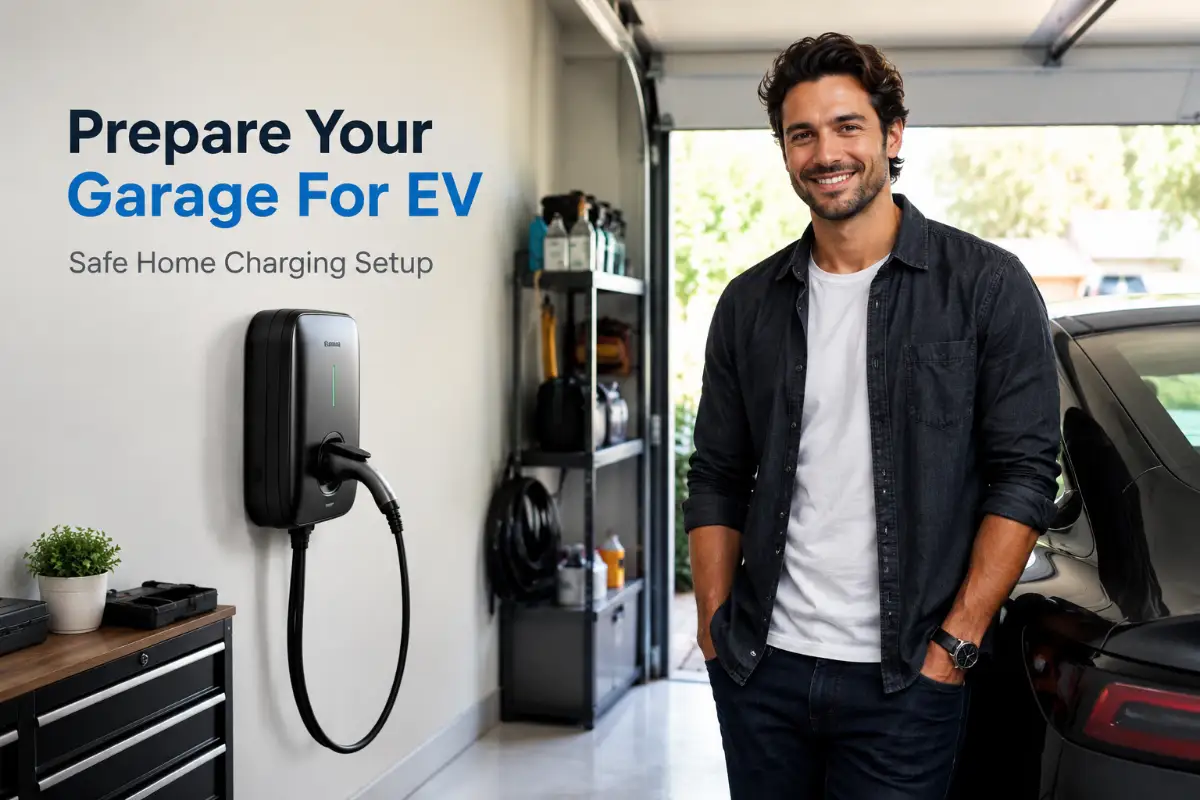
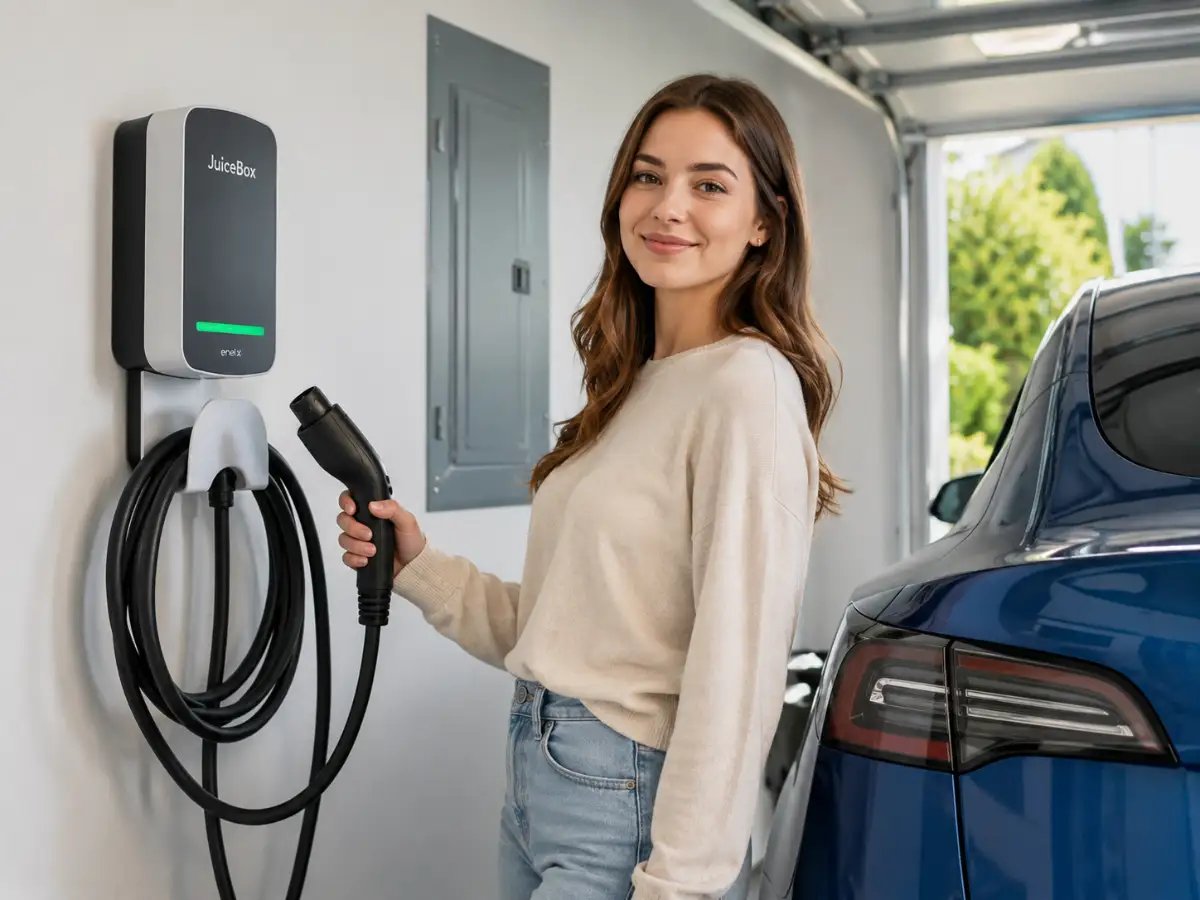
When preparing your electric vehicle charging station, plan to install a simple wall hook or a dedicated cable holster. Keeping the cord wrapped up neatly on the wall protects your expensive equipment.
It also keeps your garage looking incredibly clean and highly organized.
The Need for Dedicated Wi-Fi Coverage
Most modern charging units on the market today are actually smart devices. They connect directly to a dedicated app on your smartphone.
This helpful app allows you to track exactly how much electricity you are using each week. It also lets you schedule your charging sessions during late-night off-peak hours, saving you a lot of money on your monthly utility bill.
However, there is a very common catch that frustrates many owners. Many home garages have terrible Wi-Fi signals. Thick exterior walls, insulation, and metal garage doors easily block the internet router located inside your house.
Pro Tip: Take your smartphone into your garage right now. Stand exactly where you want to physically mount the electric vehicle charging station. Check your Wi-Fi signal bars. If the signal is very weak, you will need to plug in a simple Wi-Fi extender inside the garage. This ensures your smart charger actually stays smart and connected.
Preparing for Future Upgrades Now
When you eventually call an electrician to run new wires, you are paying mostly for their physical labor time. The copper wire itself costs money, but the really hard work is drilling holes and fishing that wire through your walls.
Because you are already paying for this heavy labor, it makes financial sense to think about your family's future.
Right now, you might only own one single electric car. But what happens exactly three years from now? Your partner might decide to buy an electric sedan too. Or you might upgrade your current car to a larger electric truck with a massive battery pack.
If you only install a small, basic wire today, you will have to tear open your walls and pay an electrician all over again when you suddenly need more power later.
The "Go Big on Wire" Strategy
A highly recommended strategy is to clearly ask your electrician to run a thicker gauge wire than you currently need. For example, ask them to run heavy wiring capable of handling a 60-amp circuit, even if you are only installing a basic 30-amp charger today.
The extra cost for the slightly thicker copper wire is very small compared to the total project cost.
This simple step effectively future-proofs your entire garage. Later on, if you buy a much faster charger, the heavy-duty wire is already sitting safely in your wall waiting to be used.
You simply swap out the physical charging unit and the breaker, saving you thousands of dollars in future labor.
Navigating Permits and City Inspections
This is the exact part of preparing an electric vehicle charging station that most people desperately want to avoid. Nobody enjoys dealing with local city government paperwork and waiting for inspectors.
However, pulling a proper electrical permit is essential for your long-term family safety and financial protection.
If you hire an unlicensed handyperson to install a high-voltage outlet under the radar, you are taking a massive risk.
If that improper wiring gets hot and causes a fire, your home insurance company can legally deny your entire claim.
They will immediately ask to see the official city inspection report. If you do not have one, you are entirely financially responsible for all the property damage.
A reputable, licensed electrician will always handle the permit for a new heavy-duty circuit. They will do the work strictly up to the national electrical safety code.
After the work is completely done, a local city inspector will come to your house. They will physically look at the wires, check the breaker sizes, and ensure every single thing is grounded safely.
Having that official green sticker of approval from the city gives you ultimate peace of mind. You can sleep soundly knowing your home garage is perfectly safe while your family sleeps and your car charges overnight.
Leveling Up Your Setup: Pro Strategies for Long-Term Success
Now that we have covered the basics of electrical capacity and safety, we can look at the bigger picture. True peace of mind comes from building a highly efficient system that actively works for you.
I want to share a few advanced strategies that professional installers use in high-end homes. These secrets will save you money, protect your expensive battery, and make your daily routine incredibly smooth.
You do not need a massive budget to implement these clever tricks. You just need a solid understanding of how energy actually flows through your property.
Beating High Utility Bills with Smart Scheduling
Many new owners are shocked when they see their first electric bill after buying their car. They assume charging at home is always pennies on the dollar compared to buying gas.
This is only true if you understand how utility companies actually charge you for power. Most modern utility providers use something called "Time-of-Use" rates for their customers.
This simply means that electricity costs much more during busy times, like early evening when everyone is cooking dinner. If you plug your car in right at 6:00 PM, you are paying absolute top dollar for that energy.
The secret is to use the smart scheduling feature built directly into your car or your wall charger. You can simply tell the system to wait until midnight to start drawing power.
According to guidelines from the US Department of Energy, utilizing off-peak hours can drastically reduce your overall energy expenses. Waking up to a fully charged car while paying the cheapest possible rate is a fantastic feeling.
The Magic of Smart Power Splitters
What happens if your home panel is completely full and you cannot add a new dedicated circuit? Many people assume they are forced to spend thousands on a massive electrical upgrade.
Thankfully, technology gives us a much cheaper and highly effective alternative. You can use a brilliant device known as a smart power splitter.
Imagine you already have a 240-volt outlet in your garage that powers your clothes dryer. A smart splitter plugs directly into that single outlet. You then plug both your dryer and your car charger right into the splitter box.
The internal computer constantly monitors the power demand. If you turn the dryer on, it instantly pauses the car charge. When the laundry is done, it automatically resumes sending power to your vehicle.
This completely eliminates the need for expensive rewiring. It safely manages the heavy loads without ever tripping your main breakers.
Climate Control and Battery Health Management
Your garage environment plays a massive role in how well your vehicle charges. Lithium-ion batteries are surprisingly similar to the human body when it comes to temperature preferences.
If your garage turns into a freezing ice box in the winter, the battery has to work incredibly hard just to stay warm. It will actually pull electricity from the wall just to heat itself up before it can even accept a proper charge.
Adding basic insulation to your garage door can drastically improve your charging efficiency. Keeping the space moderately comfortable means every drop of electricity goes directly into the battery range.
Just like you need a reliable morning routine to keep your skin glowing, your daily drive needs a consistent charging schedule. If you want to simplify your mornings with a minimalist skincare guide, a fully ready car is the perfect start.
Setting up your garage properly is highly personal. It is very much like identifying your exact skin type at home—every single property requires a unique, tailored approach for the best results.
Hidden Traps: Mistakes That Destroy Electrical Systems
Even with the best intentions, it is incredibly easy to make dangerous errors during this project. A home electrical system is highly unforgiving if you push it beyond its designed physical limits.
I want to walk you through the most dangerous pitfalls that new owners fall into. By avoiding these common traps, you protect your family, your property, and your brand-new vehicle.
The 80% Rule and Continuous Load Failures
This is absolutely the biggest technical mistake homeowners make. They buy a 50-amp charger and tell their electrician to install a 50-amp breaker.
This sounds completely logical, but it is actually a severe code violation. Electric vehicles represent what the industry calls a "continuous load."
When you run a microwave, it only pulls power for two or three minutes. When you charge a car, it pulls maximum power for eight or ten hours straight.
This constant flow of heavy electricity creates a massive amount of physical heat inside the copper wires. To prevent the wires from literally melting inside your walls, the National Electrical Code requires an 80% safety buffer.
If you have a 50-amp breaker, you can only safely program your charger to pull 40 amps. Understanding this mathematical rule is non-negotiable for long-term fire safety.
Think of your electrical panel’s maximum amperage exactly like a strict financial limit. Just as you need to safely master your health policy by understanding maximum limits, you must absolutely respect the maximum electrical load limit of your house.
The Danger of Cheap Extension Cords
We have all been in a situation where the charging cable is just a few feet too short. The immediate temptation is to grab a heavy-duty extension cord from the local hardware store.
Please, never do this under any circumstances. Standard extension cords are simply not built to handle the continuous, punishing load of a modern electric vehicle.
Even the thick, expensive cords designed for construction sites will eventually overheat when plugged into a car for ten hours. The connections between the plugs create active resistance, and that resistance quickly turns into dangerous heat.
If you absolutely cannot park close enough to the wall unit, you need a different strategy. You must hire a professional to physically move the wall unit closer to your parking spot.
Alternatively, you can purchase a high-quality charging station that comes from the factory with a much longer, certified cable. Safety organizations like the National Fire Protection Association (NFPA) consistently warn against using unauthorized adapters or extension cords for heavy appliances.
Buying Uncertified Budget Chargers Online
The internet is flooded with incredibly cheap charging units from unknown overseas brands. They look sleek, they promise massive charging speeds, and they cost half the price of reputable brands.
Buying one of these budget units is a terrible financial gamble. These cheap devices rarely carry official safety certifications from testing labs like Underwriters Laboratories (UL).
A UL listing means the device was tortured in a laboratory to ensure it fails safely if a power surge happens. Uncertified chargers lack these critical internal safety relays.
If a lightning strike or a power surge hits your home, a cheap charger can pass that massive voltage directly into your car. Frying your vehicle's onboard computer will cost you thousands of dollars in sudden repairs.
Always stick to highly trusted brands that clearly display proper safety certification marks on their physical packaging. Your peace of mind is worth the extra upfront investment.
Using Standard Residential Outlets for Heavy Duty Work
Many people decide to install a 240-volt NEMA 14-50 outlet instead of hardwiring their charging station. This is a perfectly fine choice, but it comes with a massive hidden trap.
Most people drive to the hardware store and buy a standard $10 outlet designed for an electric oven. An oven only pulls heavy power a few times a week for an hour at a time.
Your car is going to pull maximum power every single night for years. A cheap, standard residential outlet will eventually warp, melt, and potentially catch fire under that constant stress.
If you choose to use a plug-in style charger, you absolutely must purchase a commercial-grade or industrial-grade receptacle. These heavy-duty outlets cost around $50 to $80, but they feature massive metal contacts designed specifically for continuous EV loads.
Your Personal Action Plan for Tomorrow
Taking control of your garage setup does not have to be a terrifying or exhausting experience. You now possess the exact same foundational knowledge that professional electricians use every single day.
You know how to check your panel capacity safely. You understand the critical importance of the 80% continuous load rule. Most importantly, you know exactly how to avoid the dangerous shortcuts that catch so many new owners off guard.
The Final Preparation Checklist
Before you make any phone calls or buy any equipment, take ten minutes to map out your specific needs. Stand in your driveway and look at exactly how you prefer to park.
Check your home Wi-Fi signal while standing in the garage. Open up your main electrical panel and simply look at that top number.
Write these simple facts down on a piece of paper. When you finally call a licensed professional for a quote, you will sound incredibly knowledgeable and prepared.
You can confidently tell them exactly what your panel handles and where you want the cord placed. This clear communication prevents hidden fees and ensures the job gets done perfectly the very first time.
Embracing the Electric Lifestyle
Transitioning to an electric vehicle is a massive step forward in technology and daily convenience. Waking up every single morning with a completely full "tank" of energy is an absolute game-changer for your lifestyle.
You will never again have to freeze at a gas station on a dark winter morning. You will never have to worry about changing oil or replacing expensive belts.
Putting in a little bit of hard work and planning right now guarantees years of stress-free driving. Trust the process, rely on licensed professionals for the heavy lifting, and get ready to enjoy the smoothest driving experience of your life.
You have absolutely got this, and your beautifully organized, fully powered garage is just a few smart decisions away.
Figuring out all these electrical details felt super overwhelming to me at first, but taking it one step at a time changed everything. Now, waking up to a completely full battery every single morning is honestly the best part of my day. Grab a pen, check your electrical panel today, and get ready to enjoy the most stress-free driving experience you have ever had.
Disclaimer: The information provided in this article is strictly for educational and informational purposes only. Electrical work carries significant risks of injury, fire, or property damage if handled incorrectly. Always consult with a licensed, certified electrician before attempting any modifications to your home electrical system. Compliance with local building codes and obtaining necessary city permits is entirely the responsibility of the homeowner. We are not liable for any damages, injuries, or financial losses resulting from the use or misuse of this information.