
The Hidden Stress of a Chaotic Morning
I spent years waking up in a state of total panic. My alarm would scream, I’d hit snooze five times, and then I’d waste my first twenty minutes scrolling through stressful news while still under the covers. I felt like I was losing a race that hadn't even started yet, and it left me feeling snappy and drained by noon. I finally had to admit that my messy mornings were the reason I wasn't reaching my goals.
Do you wake up feeling like you are already behind? The alarm goes off, and your first instinct is to hit snooze and hide under the covers.
When you finally get up, you rush to grab your phone. You check emails, social media, and news alerts while your brain is still half-asleep.
This creates a feeling of panic that follows you all day. You feel tired, unfocused, and constantly "busy" without actually getting anything important done.
This cycle is a silent killer of dreams. It drains your energy before the sun is even fully up.
Why Most People Fail to Stay Consistent
- Information Overload: You see influencers doing 3-hour routines with yoga, journaling, and cold plunges. It feels too hard, so you just don't start.
- The "All or Nothing" Mindset: If you miss one day, you feel like a failure. This causes you to quit the entire routine instead of just trying again tomorrow.
- Lack of Preparation: You wake up without a plan. You waste your best mental energy trying to decide what to do first.
- The Phone Trap: Checking your phone first thing in the morning puts you in "reactive mode." You are responding to the world instead of leading your life .
The Cost of a Messy Morning
- Low Self-Confidence: Every time you hit snooze, you break a promise to yourself. This slowly eats away at your trust in your own discipline.
- Brain Fog: Starting the day with digital noise makes it harder to focus on deep work later. Your brain feels scattered and weak.
- Higher Stress Levels: Rushing through your morning routine causes your cortisol levels to spike. This leads to burnout and long-term health issues.
- Lost Time: Ten minutes of scrolling here and five minutes of snoozing there add up. Over a year, you lose hundreds of hours that could have built your future.
Think about your morning like the foundation of a house. If the foundation is shaky, the whole day will feel unstable.
You might try to fix it with five cups of coffee. But caffeine is just a temporary mask for a broken system.
The real solution isn't about working harder. It is about setting a rhythm that feels natural and easy to follow every single day.
When you control your morning, you control your life. It gives you a sense of power and calm that helps you handle whatever the day throws at you.
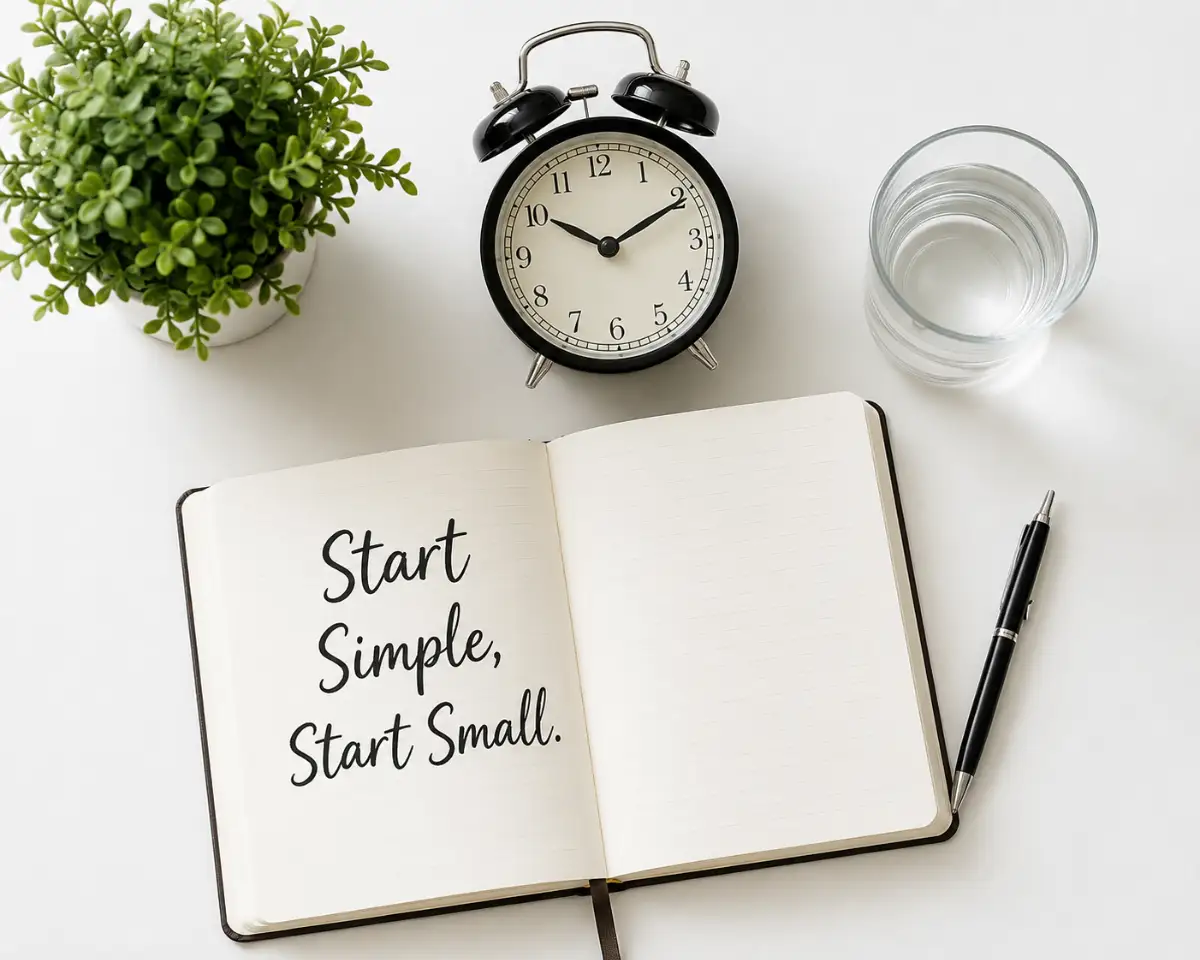
Designing Your Morning: A Simple Blueprint
To build a routine that lasts, you need to understand one thing. It is not about how many things you do; it is about doing the right things consistently.
Let’s look at the first few steps to reclaiming your time. These are based on how our bodies and brains naturally work.
I used to make the mistake of trying to change everything at once, which always led to failure. My biggest "aha" moment came when I realized that a good morning isn't about willpower; it's about making things easy for yourself. Now, I never go to bed without putting my water glass and gym shoes right where I can see them, because I've learned that my "morning brain" needs all the help it can get.
Step 1: The Secret Starts the Night Before
A great morning actually begins at 9:00 PM the previous evening. You cannot have a productive morning if you are exhausted.
Set a "Shutdown" Time: Stop looking at blue-light screens at least 30 minutes before bed. This helps your brain produce melatonin so you can sleep deeply.
Lay Out Your Gear: Put your workout clothes out. Set your journal on the table. Fill your water glass.
When you do this, you remove "friction." You don't have to think or search for things in the morning.
Write Your "Big One": Decide on the single most important task you want to finish tomorrow. Just one. This gives you a clear target the moment you wake up.
Step 2: Kill the Snooze Button Once and for All
I struggled with the snooze button for a long time until I saw how it was actually hurting my brain. Check out this quick video to see the science of waking up properly—it’ll make the next few steps much easier to follow!
The snooze button is a trap for your brain. When you fall back asleep for 10 minutes, you enter a new sleep cycle.
Waking up in the middle of that cycle leaves you feeling "sleep drunk." This grogginess can last for hours.
The "Distance Strategy": Put your phone or alarm clock across the room. You have to physically get out of bed to turn it off.
Once your feet hit the floor, you have already won the hardest battle of the day. Do not go back to bed.
Step 3: Rehydrate Before You Caffeine
Your body has been without water for 7 or 8 hours while you slept. You are naturally dehydrated when you wake up.
Dehydration causes fatigue and brain fog. Many people think they need coffee, but they actually just need water.
The 16-Ounce Rule: Drink a large glass of water before you touch a coffee mug. This wakes up your internal organs and flushes out toxins.
It is a small win that makes a huge difference in your energy levels. It tells your body that the day has officially started.
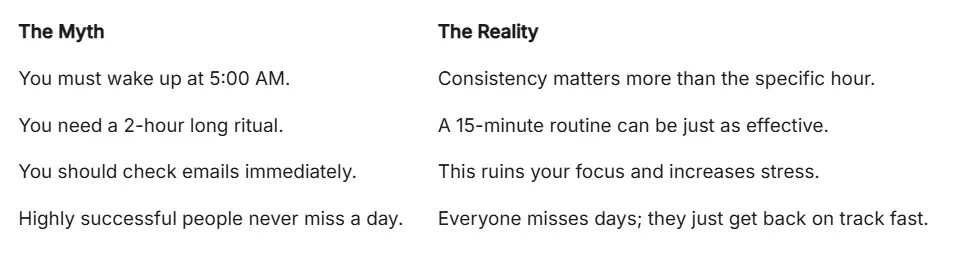
Myth vs. Reality: The Morning Routine
The "No-Phone Zone" Rule
This is perhaps the most life-changing habit you can adopt. Do not check your phone for the first 30 to 60 minutes of your day.
Your mind is most creative and calm right after you wake up. Don't fill it with other people's opinions, news, or work stress.
Use this time for you. Use it to think, breathe, or just enjoy the quiet.
If you use your phone as an alarm, turn it off and immediately put it facedown. Better yet, buy a cheap analog alarm clock.
Moving Your Body to Wake Up Your Brain
You don't need a 1-hour gym session to see benefits. Just five minutes of movement can change your mood.
Try some light stretching or a few bodyweight squats. This pumps blood to your brain and releases "feel-good" chemicals like endorphins.
It acts as a natural "reset" for your nervous system. You will feel more alert and ready to tackle your work.
Expert Insight: I have found that a quick walk outside is the best way to set your internal clock. Natural light tells your brain to stop making sleep hormones.
Avoiding Decision Fatigue
Every choice you make uses up a little bit of your "mental battery." If you spend your morning choosing what to wear or eat, you waste energy.
Automate as much as possible. Eat the same breakfast. Have a "uniform" for work.
This saves your best brainpower for your most difficult tasks later in the morning. You want to be a leader, not a manager of small details.
Why Small Wins Matter
A consistent routine is built on small wins. Drinking water is a win. Making your bed is a win.
These small actions create "momentum." Momentum is like a snowball rolling down a hill.
It starts small, but it gets bigger and faster as it goes. By the time you start your work, you already feel like a winner.
This builds a "Success Loop" in your brain. Your brain starts to enjoy the routine because it feels good to accomplish things.
Dealing with the "Morning Haters"
You might think, "I'm just not a morning person." That is often a self-fulfilling prophecy.
Your body follows the habits you give it. If you stay up late and eat junk, of course, you will hate mornings.
Start by shifting your routine by just 15 minutes. Don't try to change your whole life in one day.
Give yourself grace. If you fail one morning, don't beat yourself up. Just make the next morning better.
Practical Scenario: The "Busy Parent" Routine
If you have kids, your morning might feel out of your control. The key here is to wake up just 20 minutes before them.
That short window of "me time" can save your sanity. Use it to drink your water and sit in silence.
Even a tiny bit of control can reduce your stress for the rest of the day. It allows you to respond to your kids with patience instead of frustration.
The Power of "Leveled" Routines
Sometimes life gets crazy. You might be traveling or sick. This is where "leveled" routines help.
- Level 1 (The Basic): 5 minutes. Drink water, stretch, and check your "Big One" task.
- Level 2 (The Standard): 20 minutes. Add 10 minutes of reading or journaling.
- Level 3 (The Full): 60 minutes. Add a full workout and a healthy breakfast.
Having these levels means you never have to "quit." You just adjust based on how much time you have.
This is the secret to 100% consistency. It makes your routine "unbreakable."
Taking Your Morning Success to the Next Level
Once you have the basics down, you might want to push your results even further. A simple routine is great for getting started. But an advanced routine can help you achieve things you never thought possible.
Think of your morning like an elite athlete preparing for a big game. They don't just "show up." They follow a specific set of rules to keep their mind and body at peak performance.
Winning the Battle for Deep Focus
The first few hours after you wake up are when your brain is most capable of difficult work. This is because your "willpower battery" is fully charged.
Most people waste this precious time on easy tasks like checking Slack or sorting through junk mail.
You should aim to do your hardest, most meaningful work during this window. If you are a writer, write. If you are a coder, build. Do not let small, loud tasks scream for your attention.
Imagine you are trying to master AI image generation to build a new business. You need a clear, quiet mind to learn those complex skills. Doing this at 8:00 AM is much easier than trying to do it at 4:00 PM when you are tired.
Protect this time with everything you have. Put your phone in another room and turn off all notifications on your computer. When you win the morning, you have already done enough to make the day a success.
The Power of "Habit Stacking"
Building a routine is hard because our brains don't like change. To make things easier, you can use a method called habit stacking. This is where you take a habit you already have and "stack" a new one on top of it.
For example, you already brush your teeth every morning. You can tell yourself, "After I brush my teeth, I will sit in silence for two minutes." Since the first habit is already automatic, the second one becomes easier to remember.
This creates a chain reaction in your brain. Eventually, the entire sequence feels like one single action. You don't have to think about it anymore; you just do it.
This is a great way to build the discipline needed for other areas of life. For instance, staying consistent with a routine builds the same mental muscle needed when improving your credit score fast. Both require small, daily actions that lead to big results over time.
Creating a Workspace That Inspires Action
Your physical environment has a huge impact on your mood. If your desk is covered in old coffee cups and papers, your brain will feel cluttered too. Take five minutes every morning to clear your space.
A clean desk signals to your brain that it is time to work. It removes distractions before they even happen. Lighting also plays a major role in how you feel.
Try to work near a window if possible. Natural sunlight helps regulate your circadian rhythm. According to Harvard Health, getting enough light in the morning can improve your sleep and mood significantly.
If you work in a dark room, your body might still think it is nighttime. This makes you feel sluggish and slow. Open the curtains and let the light in as soon as you can.
The Role of Mental Preparation
Many high performers use a few minutes of visualization to prep for the day. Close your eyes and imagine yourself finishing your main task. See yourself handling a difficult meeting with calm and confidence.
This is not "magic." It is a way of training your brain to stay focused on your goals. It helps lower your stress because you have already "seen" yourself succeeding.
You can also use this time to think about your long-term security. Just as you keep your digital assets safe with a strong plan, you are keeping your time safe with this routine. You are the guard of your own life and schedule.

Why Most People Give Up (And How to Stay Strong)
It is easy to be excited about a new routine on a Monday morning. The real test comes on Thursday when you are tired and the weather is cold.
Most people fail because they hit a small bump and decide to quit the whole journey.
Understanding these traps will help you stay on track when things get difficult. Knowledge is your best tool for staying consistent.
Trap 1: The Perfectionist Mindset
Many people think if they don't do their routine "perfectly," it doesn't count. They wake up late and think, "Well, the day is ruined now." This is a very dangerous way to think.
If you wake up late, don't give up. Do a shorter version of your routine. Five minutes of stretching is better than zero minutes.
The goal is to keep the streak alive, even if it’s just a small win. Consistency is much more important than being perfect. Your brain cares about the habit, not the total minutes spent.
Trap 2: Sacrificing Sleep to Wake Up Early
This is a mistake that can hurt your health. Some people try to wake up at 4:00 AM but still go to bed at midnight. This is a recipe for burnout and long-term fatigue.
Sleep is when your body repairs itself and your brain clears out waste. If you don't get enough sleep, you won't be productive no matter how early you wake up. According to the Mayo Clinic, most adults need at least 7 to 9 hours of quality sleep.
If you want to wake up earlier, you must go to bed earlier. There are no shortcuts here. Quality sleep is the fuel that makes your morning routine work.
Trap 3: The "Information Scavenger" Habit
Some people spend their entire morning looking for "tips" on how to be productive. They read articles, watch videos, and listen to podcasts about success. But they never actually do the work.
This feels like being productive, but it is actually a form of procrastination. You don't need more information; you need more action. Stop searching for the "perfect" secret and start using what you already know.
Pick three simple steps and do them every day for a month. That will teach you more than any book or video ever could.
Trap 4: Letting the World In Too Soon
As we discussed before, checking your phone is a major mistake. But this also applies to people around you. If you start your day by solving other people's problems, you lose your own focus.
Try to keep your first hour "internal." It is your time to connect with your own thoughts and goals. Once that hour is up, you can open the door to the rest of the world.
If you live with others, explain why this time is important to you. Most people will respect your boundaries if you are clear about them .
Trap 5: The Weekend Slide
Many people follow their routine perfectly from Monday to Friday. Then, Saturday comes, and they stay in bed until noon. This confuses your body's internal clock.
When Monday rolls around again, you feel like you are starting from zero. You don't have to be as strict on the weekends, but you should still have some structure.
Try to wake up within one hour of your normal weekday time. This keeps your rhythm steady and makes Monday morning much easier to handle.
Your 24-Hour Transformation Starts Now
Building a morning routine is one of the kindest things you can do for yourself. It is a way of saying that your goals and your peace of mind matter. You are choosing to be the leader of your day rather than a victim of your schedule.
Remember, you don't need a fancy office or a lot of money to start. You just need a glass of water, a quiet space, and the desire to improve. Start exactly where you are with what you have.
A Simple 3-Day Challenge for You
I want you to try something very small. For the next three days, do only three things:
- Put your phone in another room before you go to bed.
- Drink a glass of water immediately after waking up.
- Spend five minutes thinking about your #1 goal for the day.
That’s it. Don't worry about exercise or meditation yet. Just do those three things for three days.
Believe in the Power of Small Steps
You might feel like these small changes won't make a big difference. But remember that a huge ship only needs to turn its wheel a few inches to end up in a completely different country. Your life works the same way.
Each small habit you build is a vote for the person you want to become. Over time, these votes add up until you are a completely different person. A person who is calm, focused, and ready to win.
The world is full of noise and chaos. Your morning routine is your quiet place. It is your time to build the foundation for a life of success and happiness.
You have all the tools you need. Now, it is time to use them. Sleep well tonight, wake up tomorrow, and take that first small step toward your best self.
Taking back my morning was the single best gift I ever gave myself. I’m not a perfect person, and I still have tough days, but having this routine makes me feel like I’m finally the boss of my own life. You don't need to be a "morning person" to do this—you just need to start with one small win tomorrow, and I promise you’ll never want to go back to the chaos.
Disclaimer: The information provided in this blog post is for educational and informational purposes only. It is not intended as medical advice. Always consult with a healthcare professional before making significant changes to your sleep habits, diet, or physical activity levels, especially if you have underlying health conditions.
***THANK YOU FOR READING PATIENTLY***