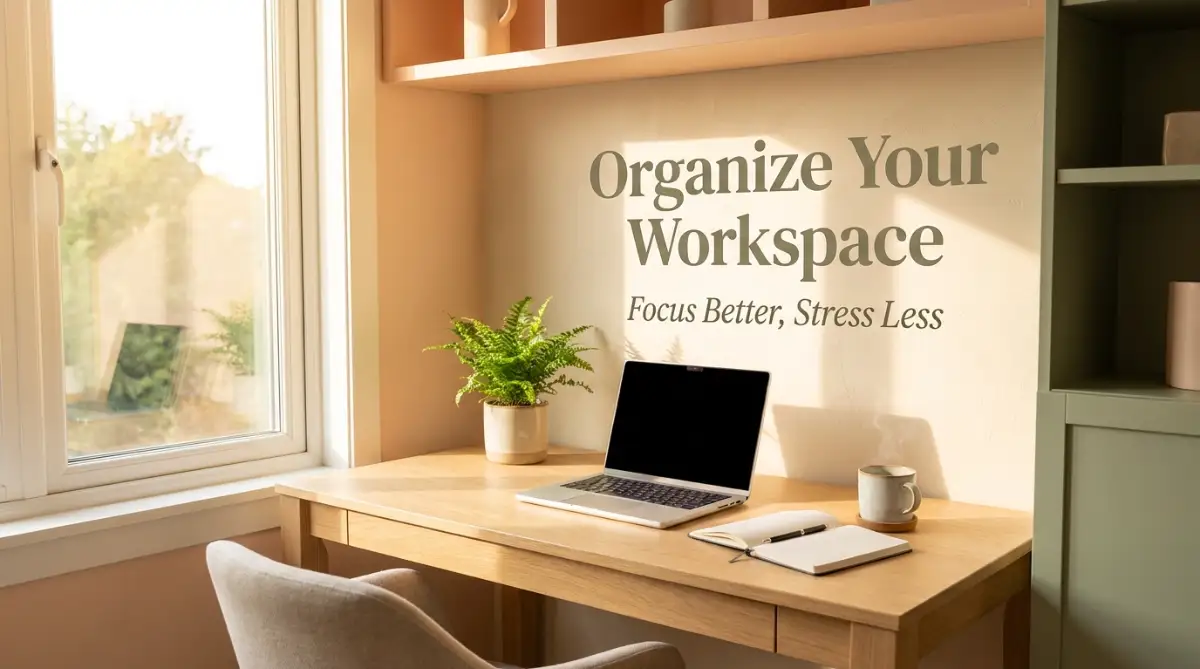
The Hidden Cost of a Messy Desk on Your Mental Peace
I used to sit at my desk every morning and feel an instant wave of exhaustion hit me. Coffee cups from three days ago sat right next to tall stacks of mail I kept ignoring. My mouse pad was half-covered by an open notebook I barely used, making every single movement a physical struggle. I actually thought I was just naturally lazy or burned out from working too many hours. But the real truth hit me hard during an important video call when I could not find a single working pen to write down a client's phone number. My messy room was quietly stealing my energy and completely destroying my attention span.
It is a terrible feeling when your own room makes you feel stressed out before you even start your work. We all want to sit down and instantly get into a smooth rhythm of productivity. Instead, we spend the first twenty minutes just pushing papers aside to make room for our keyboard.
When your desk is covered in random objects, your brain is forced to process all that visual noise. You might think you are ignoring that pile of sticky notes on your monitor, but your subconscious mind is constantly looking at it. This takes away a massive amount of your mental battery.
People everywhere are missing deadlines and feeling completely overwhelmed at home simply because they cannot find what they need. You lose a file, you get frustrated, and suddenly your motivation drops to zero. That quick loss of focus is exactly how a simple task ends up taking three hours to finish.
We start feeling guilty about our mess, which only makes the anxiety worse. You look at perfectly clean home offices on social media and wonder why you cannot keep your own things in order. But this is not a personal failure at all.
You simply have not set up a system that matches the way you naturally behave. Fixing this problem does not require you to throw away everything you own or spend hundreds of dollars on fancy boxes.
Understanding How Clutter Controls Your Brain
Before we start moving things around, we need to understand exactly why a messy table makes us feel so tired. Think of your brain like a smartphone battery. Every time you look at a loose cable, an empty water bottle, or an unpaid bill, an invisible background app opens in your mind.
Just like a phone with fifty apps running at the same time, your brain starts to lag and overheat. This is scientifically known as visual distraction. When your eyes see too many objects, your visual cortex gets overwhelmed.
Your brain has to work incredibly hard just to filter out the trash so you can read the email on your screen. This extra mental effort makes you feel physically tired by the middle of the afternoon.
Myth vs Reality: Workspace Organization
You might have heard people say that a messy room is a sign of a creative genius. While some people can function in chaos, the vast majority of us cannot. We need clear boundaries and open spaces to think properly.
When you have a completely clear surface in front of you, it signals to your brain that it is time to focus on one specific task. There is nothing else competing for your attention.
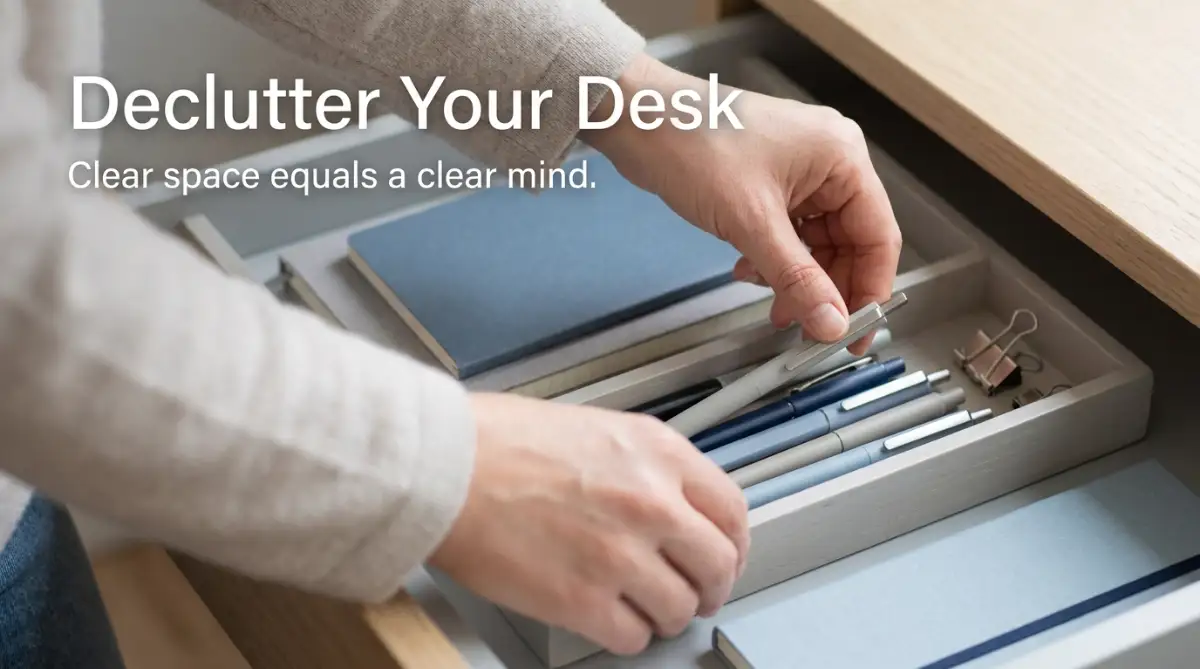
The Step-by-Step Blueprint to a Stress-Free Zone
Now that we know why the mess is hurting us, we can fix it using highly practical steps. Do not try to clean your entire room in ten minutes. That will only make you feel completely overwhelmed and you will give up halfway through.
Instead, we are going to focus entirely on the space you can reach with your arms while sitting in your chair. This is your primary command center.
The Complete Purge and Sort Method
The very first action you must take is removing absolutely everything from the top of your desk. Yes, everything. Take your keyboard, your pen cups, your decorative plants, and your papers, and put them all on the floor or on a nearby bed.
Take a damp cloth and wipe down the empty desk surface. Just looking at that clean, empty space will instantly give you a massive boost of motivation. Now, pick up each item from the floor one by one.
Ask yourself a very simple question: Did I use this item in the last three days? If the answer is no, it does not belong on top of your desk.
I used to buy beautiful, expensive organizers before I actually threw away my old papers. That was my biggest mistake. Now, I always fill a trash bag with garbage first, which saves me so much money on storage bins I do not even need.
Put all the daily essentials back on the desk. This usually includes your laptop, keyboard, mouse, one notepad, and maybe a single pen. Everything else must go into a drawer, a closet, or the trash can.
Mapping Out Your Physical Reach Zones
To keep things organized forever, you need to treat your desk like an ergonomic map. Imagine your workspace is divided into three specific zones based on how often you reach for things.
Zone One is the area you can easily reach without leaning forward or standing up. This is strictly reserved for your keyboard, your mouse, and your primary monitor. Do not put your phone or snacks in this zone.
Zone Two requires you to lean forward just a little bit. This is the perfect spot for your daily planner, your cup of coffee, or a small reference book you use often.
Zone Three is the furthest edge of your desk. This space should hold things you rarely touch but need to see, like a small desk lamp or a single framed photo of your family.
When you follow this simple zoning rule, you stop knocking things over. You also stop piling junk right in front of your keyboard because that prime real estate is heavily guarded.
Managing the Chaos Hiding Under Your Desk
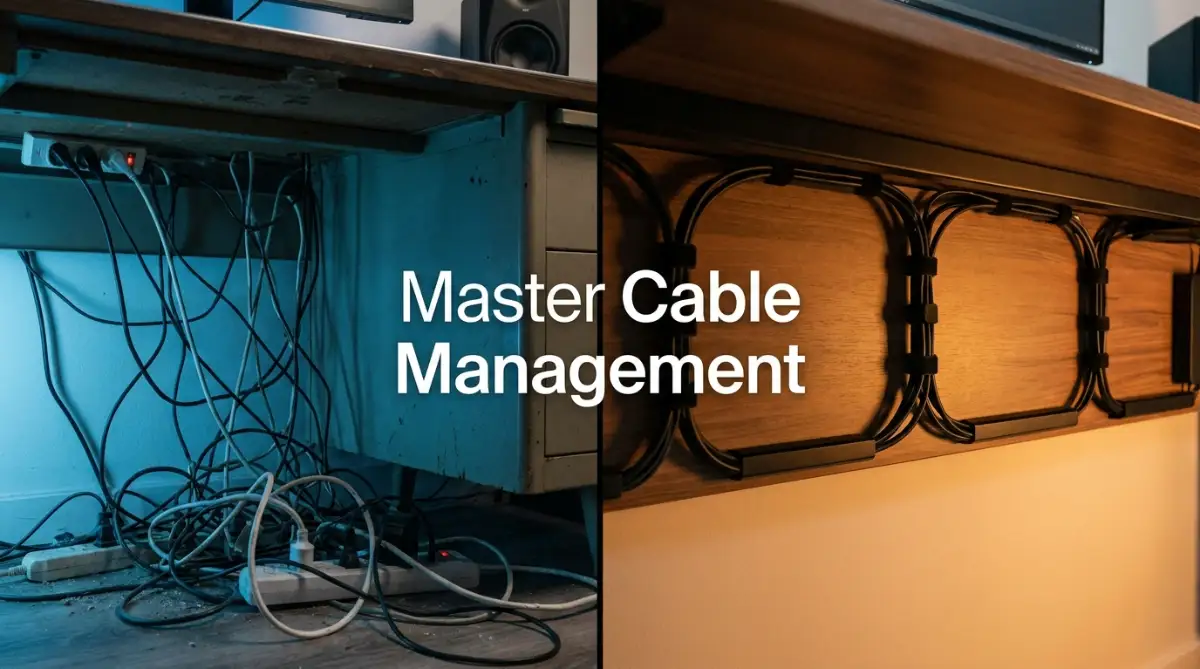
We spend so much time looking at the top of the desk that we completely ignore the disaster happening near our feet. I am talking about the massive web of tangled power cords, internet cables, and charging wires.
Even if your desk surface is perfectly clean, feeling a bunch of dusty cables wrapping around your feet will ruin your focus. Cable management might sound boring, but it is the secret trick that makes a normal room look like a professional studio.
Transforming Your Setup Instantly
Here is exactly how you can hide those ugly wires and give your brain instant relief.
You do not need to hire an electrician to fix this. Buy a cheap pack of reusable velcro strips from a local store. Group all the cables that run in the same direction and wrap a velcro strip around them every few inches.
Next, attach a wire basket or a cable tray to the bottom of your desk. You can use strong double-sided tape if you do not want to drill holes in the wood. Place your heavy power strip inside this tray.
Suddenly, you have zero cables touching the floor. You can easily stretch your legs, and vacuuming your room becomes incredibly easy. This hidden organization trick makes your entire workspace feel twice as big.
The Power of Proper Workspace Lighting
You cannot maintain good focus if you are squinting your eyes at a bright screen in a dark room. Bad lighting causes massive headaches and makes you feel sleepy very quickly.
If possible, always place your desk sideways next to a window. You want the natural sunlight hitting your desk from the left or right side. Never put the window directly behind your monitor, because the bright glare will completely blind you.
If you do not have a good window, you must invest in layered artificial lighting. The worst thing you can do is rely entirely on a single overhead ceiling light. That creates ugly shadows on your papers and strains your eyes.
Add a simple, warm desk lamp to your setup. A monitor light bar is also an incredible tool. It sits directly on top of your screen and shines light perfectly downward onto your keyboard without hitting your eyes.
When your eyes feel relaxed, your brain feels relaxed. You will be amazed at how much longer you can read reports or write emails just by fixing the light in your room.
Choosing the Right Colors for Your Office
We often ignore how the colors around us change our daily mood. If your desk is covered in bright neon sticky notes, red folders, and highly patterned cups, your brain is constantly stimulated in a bad way.
Bright red and neon colors signal danger and urgency to our minds. Having too much of this in your vision increases your blood pressure and makes you feel rushed.
Try to switch to a more natural, neutral color palette for your office supplies. Think about soft blues, gentle greens, warm browns, and simple greys. These earthy tones naturally lower your heart rate and promote deep concentration.
Even changing your desktop wallpaper to a calm nature scene instead of a busy, chaotic graphic can instantly improve your focus. It is all about creating a soft, peaceful environment where your thoughts can flow clearly.
Bringing Life into Your Room Without Cluttering
A highly organized workspace does not have to feel completely empty and cold like a hospital room. You want your room to feel welcoming. The easiest way to do this is by adding a touch of natural life.
Get one small, easy-to-care-for plant. A snake plant or a small pothos is perfect because they do not require much attention and they will not die if you forget to water them for a week.
Having a small piece of nature on your desk actually improves indoor air quality. Psychological studies show that looking at green plants naturally reduces mental fatigue.
However, stick to the rule of one. One plant is a beautiful decoration. Seven plants on your desk will simply become a new form of clutter that leaves dirt on your papers.
The Five-Minute Evening Reset Habit
You can set up the most beautiful, organized office in the world, but it will become a mess again in three days if you do not build a maintenance habit. This is where most people fail entirely.
They spend six hours cleaning on a Sunday, and by Wednesday, the coffee cups are back. You need to protect your future self by doing a five-minute reset at the very end of your workday.
When you finish your final task, do not just close your laptop and run away from the room. Take exactly five minutes to put things back exactly where they belong.
Take your empty mugs to the kitchen sink. Throw away the random notes you no longer need. Put your pens back into the drawer. Push your chair in neatly.
When you walk into that room the next morning, you will be greeted by a perfectly clean, ready-to-use workspace. That morning feeling of calm is worth a million dollars. It sets a positive, focused tone for your entire day.
Connecting Digital Organization to Physical Peace
While we are mainly talking about physical items, your computer screen is a major part of your visual workspace. Having a beautifully clean desk means nothing if your computer desktop has four hundred messy files scattered all over it.
Your physical mess and your digital mess are completely connected. When your digital files are unorganized, you end up writing physical sticky notes to remind yourself where things are, which creates more physical clutter.
Take a moment to delete files you do not need. Create clear, simple folders labeled by project or by month. Close those fifty browser tabs you have been keeping open for two weeks.
When you pair a physically clean desk with a digitally organized computer, your ability to focus deeply multiplies. You remove all friction from your workflow. You stop searching for things, and you start actually doing your work.
Organizing your workspace is never really about making things look pretty for a photograph. It is a highly practical system designed to protect your limited energy and keep your mind completely clear.
Next-Level Desk Habits for Deep Work and Mental Clarity
Once you have cleared the physical trash and hidden your messy cables, you are ready for the professional strategies. A truly great workspace is not just about looking clean on the surface. It is about building an invisible system that protects your energy all day long.
One of the best secrets to staying sharp is managing your physical comfort along with your visual space. You can have a perfectly clean table, but if your chair hurts your back, your brain will still get distracted.
You need to set up your monitor so that the top of the screen is exactly at your eye level. If you are constantly looking down at a laptop, you will develop terrible neck pain by the afternoon. According to workstation setup guidelines by the Mayo Clinic, keeping your screen at the proper height prevents massive physical fatigue.
Prop your laptop up on a stack of heavy books if you do not want to buy a fancy stand. Then, connect a cheap external keyboard and mouse so your hands can rest flat on your desk. This tiny change makes typing feel completely effortless.
Mastering the Art of Digital and Physical Boundaries
We often forget that our smartphones are the biggest source of clutter in our daily lives. If your phone is sitting right next to your keyboard, facing up, you are going to pick it up. You do not even realize you are doing it.
Every single time the screen lights up with a notification, your brain completely loses its current train of thought. To skyrocket your focus and master time management easily, you must physically remove the phone from your immediate vision.
Put it in a drawer, place it behind your monitor, or leave it in a completely different room. When you create this physical barrier, you are telling your brain that the current project is your only priority.
Instead of relying on your phone for notes, keep a single, high-quality notebook on your right or left side. When a random idea pops into your head, write it down quickly on paper and go back to your screen.
Later, you can process those handwritten notes and turn them into digital tasks. Speaking of digital systems, if you are looking for better ways to manage your online projects, the ultimate guide to discovering free creative tools that actually work can help you organize your software just like your physical desk.
Using Scent and Sound to Trigger Your Brain
Top professionals use sensory triggers to force their minds into a state of deep concentration. Your brain builds very strong connections between specific smells, sounds, and daily habits.
If you only light a peppermint or lemon candle when you are doing serious work, your brain will start to associate that specific smell with productivity. Soon, simply smelling that scent will automatically put you in a working mood.
The same rule applies strictly to background noise. Complete silence can actually be very distracting because you hear every tiny creak in the house. A loud coffee shop can be just as bad.
Instead, play a continuous loop of brown noise, soft rain sounds, or gentle instrumental music. A detailed study published by the American Psychological Association shows that consistent, low-level background noise heavily improves cognitive performance and memory.
When you combine a clean desk with a specific work scent and calming background noise, you create a powerful productivity bubble. You will easily block out the rest of the world.
The "One Touch" Rule for Paperwork and Mail
Paper is the absolute worst enemy of a clean office. A single piece of mail seems harmless, but it quickly invites five more pieces of paper to join it. Suddenly, you have a mountain of stressful documents sitting next to your coffee cup.
If you have a pile of unpaid bills sitting in plain sight, it creates massive background anxiety. You might sit down trying to understand what is a good credit utilization ratio a simple guide can help with, but the physical mess of the papers ruins your concentration.
To solve this, you must adopt the strict "One Touch" rule. When you pick up a piece of mail or a printed document, you are only allowed to touch it once.
You must immediately make a decision: throw it in the recycling bin, file it away in a drawer, or complete the task right then and there. Do not put it back down on your desk with the promise of "looking at it later."
If you are setting up a workspace in a brand new house, keeping papers organized from day one is essential. Just like you want to avoid these huge mortgage mistakes as a first time home buyer, you want to avoid desk setup mistakes that cost you hours of lost time.
The Hidden Traps That Quickly Ruin Your Progress
Even with the best intentions, people fall into completely predictable traps when trying to fix their rooms. The most common mistake is going shopping before you actually throw anything away.
You feel motivated, so you drive to the store and buy a bunch of beautiful acrylic boxes, filing cabinets, and pen holders. You bring them home and try to stuff all your existing junk into these new boxes.
This never works. You are simply hiding your trash inside expensive plastic containers. In fact, health experts at the Cleveland Clinic note that hiding clutter without reducing it still leaves you feeling mentally heavy and stressed.
You must aggressively throw away dried-out pens, old receipts, and broken cables first. Only buy storage containers after you know exactly what items you have left to store.
The Danger of the "Just For Now" Habit
The biggest threat to your beautiful new desk is a tiny phrase you say in your head: "I will just put this here for now." This is how the mess always starts to grow back.
You bring a coffee mug from the kitchen and leave it on your desk "just for now." You take off your watch and drop it next to your keyboard "just for now."
One tiny item gives permission for another item to join it. Before you know it, your pristine workspace looks like a disaster zone again. You have to be completely ruthless about keeping random objects away from your computer.
If an item does not help you do your work, it is not allowed to stay on the desk. You must force yourself to walk back to the kitchen or the bedroom to put things away immediately.
Over-Complicating Your Storage System
Another massive pitfall is trying to create a system that requires too much effort to maintain. I once tried to color-code all my written notes with five different highlighters based on priority.
It looked amazing on the first day. By the third day, I was too tired to find the right color pen, so I stopped taking notes altogether. Your organizational system must be incredibly lazy-proof.
If it takes you more than three seconds to put an item away, the system is broken. Use open bins inside your drawers so you can just drop things inside easily. Keep your folders simple and do not create fifty tiny categories for your papers.
The easier it is to put things back in their proper home, the more likely you are to actually do it when you are exhausted after a long day.
Your Personal Blueprint for a Clear Mind
We have covered exactly why the mess hurts your brain and how to build a space that practically forces you to succeed. You now have a complete understanding of physical boundaries, lighting, and daily maintenance.
Remember that creating an amazing workspace is an ongoing personal journey. You do not have to make it look exactly like a magazine cover. It just needs to feel good to you.
Start extremely small today. Just pick one corner of your desk, take everything off, wipe it down, and only put back the absolute essentials.
If you want to read more about building better daily habits and tools, feel free to visit our main homepage for more resources. Every tiny step you take toward clearing your room is a massive step toward clearing your mind.
I still remember how overwhelmed I used to feel every single morning when I looked at my chaotic table. Taking control of my physical space was the single most powerful change I ever made for my daily peace, and I know it will do the exact same thing for you.
Answers to Your Biggest Desk Setup Questions
How long does it realistically take to organize my workspace?
If you focus on just your primary desk area, it should only take about thirty to forty-five minutes. Do not try to clean the entire room or closet at the same time, because that will quickly lead to burnout.
What if I only have a very small desk in my bedroom?
When you have a tiny desk, vertical storage becomes your best friend. Use a monitor stand with empty space underneath it, and attach small floating shelves to the wall directly above your screen to keep your items off the desk surface.
How often should I clean and wipe down my desk?
You should do a quick two-minute visual reset at the end of every single workday to put things away. For a deeper clean, wipe down the surface and dust your keyboard once a week on Friday afternoons.
Should I keep personal items like photos on my desk?
Yes, personal items are great for your mood, but keep them heavily limited. Stick to one or two highly meaningful items, like a family photo or a small souvenir, and place them on the far edges of your table so they do not block your hands.
How do I stop my cables from falling behind my desk?
You can use cheap adhesive cable clips or small binder clips attached to the back edge of your desk. Simply thread your charging cables through the metal loops, and they will never slip down onto the floor again.
Disclaimer: This article is for informational and educational purposes only. The tips and strategies provided are based on personal experience and general best practices. If you experience severe chronic stress, anxiety, or focus issues, please consult with a qualified medical professional or certified therapist.
THANK YOU