
The Hidden Stress of Buying Airline Tickets Online
Last year, I spent three hours staring at my laptop trying to book a simple flight to see my family. Every time I hit refresh, the price jumped higher, and my heart started racing as panic set in. I finally panic-bought a ticket that cost way more than my budget, leaving me feeling completely cheated by the airline website.
We have all been there at some point. You sit down with a cup of coffee, excited to plan your dream vacation, and open your laptop. But within just twenty minutes, that excitement completely vanishes.
Instead of a fun planning session, you find yourself trapped in a confusing maze of jumping prices and aggressive countdown timers. You watch the cost of a simple seat increase by fifty dollars just because you refreshed the page. It feels less like buying a service and more like playing a rigged game against a supercomputer.
This daily struggle is entirely real for millions of travelers. We just want to get from point A to point B without emptying our wallets. Yet, the system seems designed to confuse us.
Here is exactly why so many travelers end up frustrated and paying much more than they should:
- Falling for fake urgency: Many websites use bright red text warning you that "only 2 seats are left at this price!" This creates instant panic, forcing you to buy quickly before checking other options.
- Believing outdated advice: People waste hours clearing their browser cookies or using incognito mode, thinking it will magically drop the price. We will see later why this old trick no longer works.
- Hidden fees destroying budgets: You find an amazingly cheap ticket, only to realize later that you have to pay extra for a carry-on bag, seat selection, and even printing your boarding pass.
- The layover trap: Booking a deeply discounted ticket that actually requires a 14-hour overnight wait in a random, uncomfortable airport terminal.
These common mistakes do not just hurt your bank account. They take a massive toll on your mental well-being before the trip even begins.
Let us look at how this confusing environment destroys our peace of mind:
- Heavy decision fatigue: Looking at ten different websites with hundreds of slightly different price combinations leaves your brain completely exhausted.
- Constant fear of missing out: You always wonder if you should book right now or wait until tomorrow. The anxiety of potentially paying more tomorrow keeps you awake at night.
- Loss of travel confidence: When you finally click the payment button, you rarely feel happy. Instead, you feel a lingering sense of doubt, wondering if you just got scammed by a hidden algorithm.
You deserve to plan your trips with absolute confidence and excitement. It is time to pull back the curtain and see exactly how these digital systems operate.
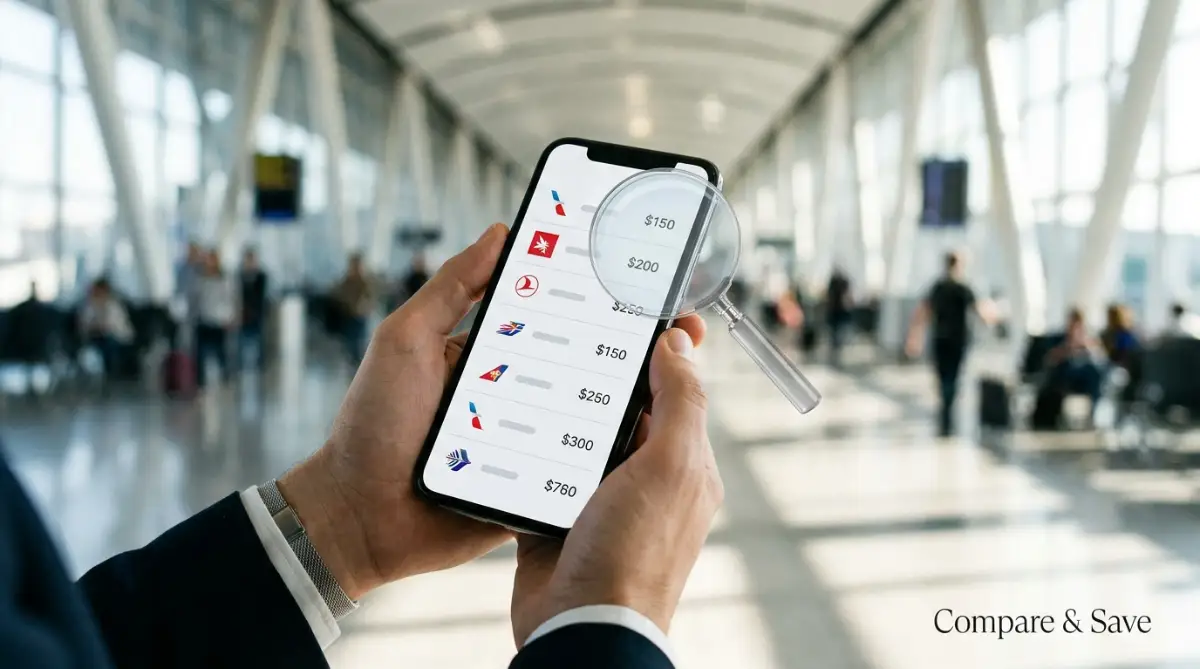
Decoding the Mechanics of Travel Search Engines
If we want to stop overpaying for our trips, we must first understand the tools we are using. Think of flight booking like shopping at a massive international supermarket. If you do not know which aisle holds the fresh produce and which aisle holds the overpriced snacks, you will make bad choices.
Booking platforms are not your enemies, but they are highly optimized machines designed to maximize revenue. When you learn how to read their signals, you can easily turn the odds in your favor.
Let us break down the exact strategies you need to master this digital maze.
Step 1: Separate the Aggregators from the Agencies
One of the biggest mistakes travelers make is treating all travel websites exactly the same. They are not. If you do not know the difference between an OTA and a Metasearch engine, you are essentially flying blind.
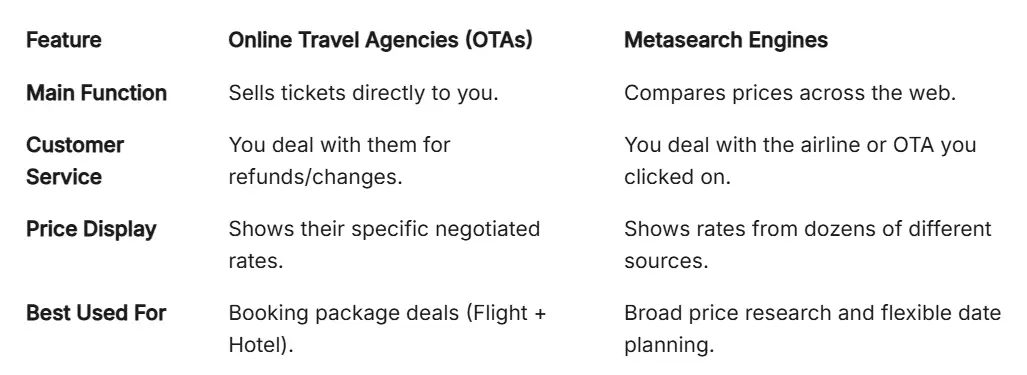
Online Travel Agencies (OTAs) are digital storefronts. Websites like Expedia or Booking.com actually process your payment and issue your ticket. They act as the middleman between you and the airline.
On the other hand, Metasearch Engines like Google Flights or Skyscanner are just massive search tools. They do not sell you anything directly. Instead, they scan hundreds of airlines and OTAs, show you the prices, and then send you to another site to actually buy the ticket.
If you are still a bit confused about which websites actually save you money, I highly recommend watching this quick video breakdown below. It will show you exactly how to spot the difference in seconds, making the rest of the steps in this guide so much easier to use.
Here is a simple breakdown to help you visualize the difference:
Expert Insight: I always recommend starting your journey on a Metasearch engine to get a bird's-eye view of the market. Once you find the best route, try to book directly with the airline's official website. If a flight gets canceled, dealing directly with the airline is much easier than arguing with a third-party agency.
Step 2: Understand the Illusion of Dynamic Pricing
Have you ever wondered why the person sitting next to you on a plane paid half the price you did? It is all because of something called dynamic pricing. Airlines use incredibly complex software to constantly adjust ticket prices based on supply, demand, and historical data .
Imagine you are running a bakery that sells fresh bread. In the morning, when everyone wants breakfast, you might charge a premium. Right before closing, you discount the remaining loaves so they do not go to waste.
Airlines do the exact same thing with seats. They know that business travelers will pay almost anything for a last-minute ticket on a Monday morning. They also know that vacationers look for cheap weekend deals.
The algorithm looks at how many days are left until departure and how many seats are still empty. If tickets are selling faster than normal, the computer automatically raises the price. If the plane is mostly empty, the system drops the price to attract bargain hunters.
Myth vs. Reality: The Cookie Monster
The Myth: Travel websites track your browser cookies and raise the price every time you search the same route.
The Reality: Prices change because seat inventory is constantly shifting in real-time. Millions of people are searching and buying simultaneously. Clearing your cookies will not magically create a cheaper seat if the cheap seats are already sold out.
For years, I wasted so much time frantically clearing my browser cookies, thinking it would magically drop the ticket price back down. My biggest realization was that airlines do not care about my search history; they just raise the price when the cheaper seats sell out. Once I stopped stressing over cookies and simply shifted my departure dates by a single day, I started saving hundreds of dollars.
Instead of worrying about browser cookies, focus on the actual fare classes. An economy cabin is not just one price. It is split into many invisible "buckets" categorized by letters like Y, M, or B.
When the cheapest bucket (let's say, $100 seats) sells out, the website automatically bumps you to the next bucket (the $150 seats). This is the real reason prices jump while you are searching. You simply missed the last ticket in the cheaper bucket.
Step 3: Master the Art of Flexible Searching
The single most powerful weapon you have against airline pricing algorithms is your own flexibility. If you are locked into flying out on a Friday evening and returning on a Sunday afternoon, you will always pay the highest possible premium.
To find the hidden deals, you must learn how to manipulate the search parameters. Start by using the calendar view feature available on almost every major search platform.
Instead of entering specific dates, open the monthly calendar. You will often see a color-coded grid showing which days are cheapest to fly. Shifting your departure by just 24 hours can sometimes cut the ticket price in half.
Real-Life Scenario: Let us say you want to visit Paris. Flying out on a Thursday and returning on a Tuesday might save you $300 compared to the traditional Friday-to-Sunday weekend trip.
You also need to think about alternative airports. Major cities usually have more than one airport within driving distance. Searching for "All London Airports" rather than just "Heathrow" opens up a massive range of low-cost carrier options.
Furthermore, you can experiment with booking two separate one-way tickets instead of a traditional round trip. Sometimes, flying out with Airline A and coming home with Airline B is significantly cheaper than booking the whole journey with one company.
It takes a little extra time to check these different combinations. However, this small time investment is exactly how smart travelers consistently beat the system. You are no longer just accepting the first price the computer throws at you. You are actively commanding the search engine to do the hard work for you.
Beyond the Basics: Elite Strategies for Finding the Sweet Spot
Now that we understand how the search engines and pricing algorithms actually operate, it is time to level up. Standard searching will only get you standard results. If you want to unlock the absolute best rates available online, you need to think differently.
Most travelers simply type in their home airport and their final destination. This single action is exactly why they end up overpaying for their trips.
Instead of taking the direct digital route, smart planners use creative workarounds. These methods require a bit more screen time, but the financial payoff is massive. Let us break down a few expert-level tactics that you can start using today.
The Power of the Positioning Flight
If you live near a smaller regional airport, you are likely paying a massive premium just for convenience. Airlines know you have limited options, so they price those local flights heavily.
To beat this, you should separate your journey into two distinct parts. This is known in the travel industry as booking a positioning flight.
Real-Life Scenario: Imagine you want to fly from a small town in Ohio to Rome, Italy. If you search for that exact route, the computer might quote you a massive sum. However, if you look for flights from a major international hub like New York or Chicago to Rome, the price might be incredibly cheap.
Your strategy is to buy that cheap international ticket first. Then, you buy a completely separate, low-cost domestic ticket just to "position" yourself in New York or Chicago. Even when you add the two separate costs together, you often save hundreds of dollars.
Just remember that you are flying on two separate itineraries. If your first flight is delayed, the second airline will not wait for you. You must leave plenty of time between the two flights, perhaps even enjoying an overnight stay in your connecting city.
Exploring Currency Arbitrage and Payment Options
Sometimes, the price of a ticket changes depending on where the airline thinks you are located. It also changes based on the actual currency you choose to pay with at checkout.
If you are booking a domestic flight within a foreign country, always check the price in their local currency. For example, if you are traveling within Thailand, switch the currency display on the website from your native currency to Thai Baht.
Often, the foreign currency price is noticeably lower than the converted rate they offer tourists. To take advantage of this trick, you absolutely need to use a credit card that does not charge extra fees for international purchases.
You can easily explore reliable no foreign transaction fee credit cards through trusted financial resources before your trip. Using the right card ensures that the money you save on the ticket is not eaten up by bank fees.
Leveraging the 24-Hour Grace Period
One of the most powerful, yet heavily underused, consumer protection laws is the 24-hour cancellation rule. Many aviation authorities require airlines to offer a full cash refund if you cancel within 24 hours of booking.
This rule effectively gives you a risk-free window to lock in a great price. If you see an amazing deal late at night, you do not have to wait until morning to ask your travel partner. You can book the seat immediately to secure the low rate.
If your partner says they cannot get the time off work, you simply cancel the next morning for a full refund. Furthermore, if you book a ticket and the price drops significantly the next day, you can cancel the original ticket and rebook at the lower rate.
However, you must be extremely careful to read the fine print. This rule usually only applies if you book directly with the airline, not through a third-party agency. Before you try this, I highly recommend you stop paying extra and read airline ticket restrictions like a pro so you know exactly what rules apply to your specific fare.

Financial Traps Hidden in Plain Sight
Even armed with advanced strategies, the online booking process is filled with cleverly disguised traps. Airlines and third-party websites have designed checkout pages that easily trick rushed buyers.
Making a mistake here does not just cost you a few extra dollars. It can completely ruin your travel budget and cause massive headaches at the airport check-in counter.
Let us look closely at the most dangerous pitfalls you need to avoid.
The Basic Economy Illusion
The most common mistake travelers make today is blindingly clicking on the absolute lowest price displayed on the screen. Airlines introduced "Basic Economy" fares specifically to rank first on price comparison websites.
These fares look incredibly cheap, but they are entirely stripped of basic services. When you buy this ticket, you are essentially buying a seat on the plane and nothing else.
You will likely have to pay extra to bring a regular carry-on bag. You will pay a premium just to pick a seat next to your family. Often, these tickets are the last to board the plane, meaning overhead bin space is already gone.
By the time you add up all these separate charges, you usually end up paying much more than a standard economy ticket would have cost. Always click the "compare fare classes" button to see what is actually included before you provide your credit card details.
The Third-Party Change Fee Nightmare
We discussed earlier how Metasearch engines send you to different online travel agencies to buy your ticket. Some of these agencies offer prices that are ten or twenty dollars cheaper than the official airline website.
While saving twenty dollars sounds great, you are taking a massive risk. When you book through an obscure third-party site, they completely own your reservation. The airline cannot help you if something goes wrong.
If the airline cancels your route, you have to call the third-party agency to get a new flight. These agencies are notorious for terrible customer service, endless hold times, and massive "processing fees" just to fix a problem they did not create.
This is incredibly similar to the hotel industry. Navigating these tricky agency rules requires patience, much like decoding non-refundable hotel bookings before you pay. The small upfront savings are almost never worth the stress if your travel plans suddenly change.
The Impossible Layover Trap
Another dangerous trap is the ultra-short layover. Booking platforms will happily sell you an itinerary with a forty-minute connection in a massive international airport.
In a perfect world, a forty-minute connection is fine. But in the real world of aviation, a ten-minute departure delay and a slow gate arrival will completely destroy your plans.
If you miss that connection, you might be stuck sleeping on an airport floor until the next day. You must take control and manually verify that your connection times are realistic.
As a general rule, always look for layovers that are at least ninety minutes for domestic travel. For international flights where you have to clear customs, you want a minimum of two to three hours. You can always check official guidelines on minimum connection times to ensure you are protecting yourself from missed flights.
Overlooking Proper Trip Protection
Finally, completely ignoring travel and medical coverage is a major financial risk. Many travelers skip the insurance page during checkout because they want to save money.
If your luggage is lost, or if you get sick abroad, paying out of pocket can bankrupt you. However, do not just blindly buy the default insurance offered by the airline at checkout.
Those default policies are often overpriced and offer terrible coverage limits. You need to read the fine print and understand exactly what is covered in an emergency.
Taking the time to understand your coverage is just as important as mastering your health policy limits and deductibles. Always shop around for independent travel insurance to find a plan that actually protects your specific needs.
Your Master Action Plan for Your Next Vacation
Navigating these digital platforms does not have to be a miserable, anxiety-inducing experience. You now have the exact blueprint to bypass the confusing algorithms and find exactly what you want.
The secret to stress-free planning is shifting your mindset. You are no longer just a passive shopper accepting whatever price pops up on the screen. You are an informed traveler who knows exactly how to make the system work for you.
Before you book your next grand adventure, run through this simple mental checklist:
- Did I check the monthly calendar? Never search specific dates without looking at the broader weekly trends first.
- Am I flying into the right airport? Always explore neighboring cities and test the positioning flight strategy.
- Do I know what this ticket actually includes? Never buy a Basic Economy fare without calculating the hidden baggage and seat fees.
- Am I booking direct? Whenever possible, take the slightly higher price to book directly on the official airline website for peace of mind.
Travel is supposed to be one of the most rewarding experiences of our lives. Do not let a confusing website steal that joy before you even pack your bags .
Take a deep breath, open up a new search tab, and start experimenting with your new skills. You have the knowledge to secure an amazing deal, and a beautiful world is out there waiting for you to explore it. Safe travels, and enjoy every single moment of your upcoming journey!
Booking my own trips used to give me terrible anxiety, but learning these simple tricks completely changed how I travel. I want you to remember that finding a great deal is entirely possible once you know how the system works. Go ahead, test out these steps on your next search, and watch how much money you can save for the actual fun parts of your vacation!
Disclaimer: The information provided in this guide is for educational and informational purposes only. Travel prices, airline policies, and booking platform algorithms are constantly changing in real-time. We always recommend reading the official terms and conditions on any booking platform or airline website before making a final financial transaction.
THANK YOU