
The Hidden Stress of Choosing the Wrong Loan Rate
Have you ever felt a knot in your stomach when checking your bank account after a payment? Many people sign loan agreements without fully grasping how their interest rates will behave over time. This lack of knowledge often turns a simple loan into a long-term source of anxiety. You might start with excitement, but the reality of rising payments can quickly change your mood .
Why Most People Get Trapped in Bad Decisions
Many borrowers rely on guesswork instead of hard facts when picking a loan type. This habit often leads to unnecessary financial strain that could have been avoided. Here is why the current way of choosing loans is failing many individuals:
- Reliance on outdated advice: People often copy what their friends or family did years ago, ignoring their own unique income levels.
- Misinterpreting marketing language: Banks use complex terms that make variable rates look cheaper, hiding the risk of future hikes.
- Ignoring long-term habits: Most borrowers focus only on the monthly payment today, forgetting how their budget might change in five years.
- Fear of reading documents: The sheer volume of paperwork leads many to sign without comparing the actual math behind the rates.
The Emotional Toll of Financial Uncertainty
The pressure of an unpredictable loan is not just about numbers; it impacts your mental peace and daily life. Living with the constant fear that your next payment might be higher than the last one can be exhausting.
- Constant worry: You may find it hard to enjoy your weekends because you are worried about interest rate spikes.
- Lack of confidence: Not knowing if you made the right choice leaves you feeling vulnerable to market changes.
- Stunted life goals: When your loan payments are unstable, you might postpone important life plans like traveling or home improvements.
- Relationship friction: Financial stress is a leading cause of tension within families, especially when budgets have to be slashed suddenly.
Taking a loan should be a tool to build your future, not a weight that pulls you down. When you understand exactly how your interest is calculated, you regain control over your life. You stop being a victim of market swings and start acting as a confident manager of your own money. Knowledge acts as a shield against the stress of rising costs. When you know what to expect, you can plan your savings, your spending, and your future with total clarity.
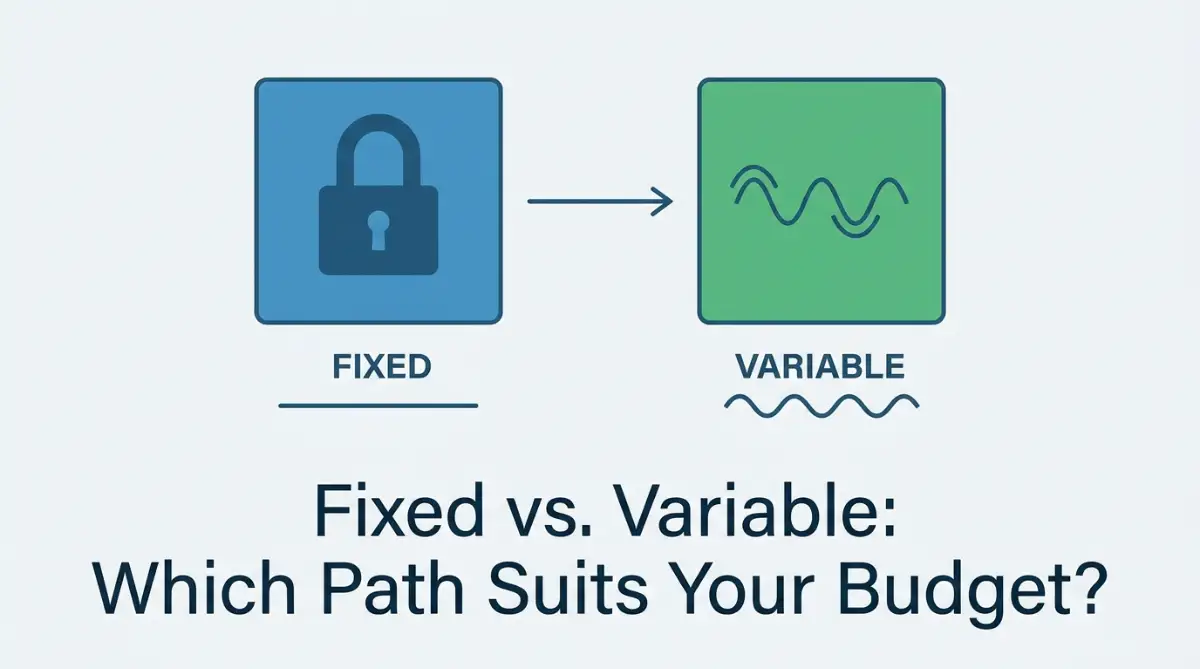
Understanding Your Loan: The Foundation of Smart Borrowing
To stop the cycle of stress, we need to break down the mechanics of interest. It is not about luck; it is about choosing the structure that matches your personality and financial health.
Step 1: Analyze Your Risk Appetite
Before you look at any interest rate offer, you must look at your own comfort level. Ask yourself if you can handle a surprise increase in your monthly bill. If your income is steady and you prefer to know exactly what you will pay for the next few years, Fixed Rates are likely your BEST FRIEND.
A fixed rate locks your interest cost in place, regardless of what the economy does. This provides a safety net that protects your budget from inflation and market volatility. Think of it as a financial anchor that keeps your ship steady during a storm. If you are someone who likes to plan every penny, this is the most logical path for you.
Step 2: Evaluating the Variable Rate Option
A variable rate is tied to the current market. When the market moves, your rate moves with it. This can be a great advantage if interest rates in the economy go down, as your payment drops automatically. However, the reverse is also true.
You should only consider a variable rate if you have a flexible budget and a solid emergency fund. If you have extra cash every month, you can use the savings from a low-interest period to pay down the principal faster. This is an advanced strategy, but it requires discipline. If you choose this path, always prepare for the "worst-case" scenario in your monthly budget.
Step 3: Use the "Stability vs. Savings" Comparison
The best way to decide is to create a simple side-by-side comparison. Don't look at just the first-year rate. Instead, look at the historical movement of rates and your total cost over the life of the loan.
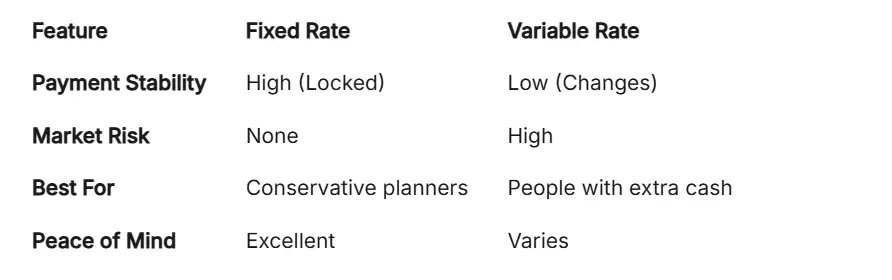
If you prioritize peace of mind above all else, always choose the fixed rate. It removes the guesswork and keeps your financial life predictable. If you are comfortable with some risk and want the possibility of paying less over time, a variable rate might save you money. The key is to match the loan type to your personal stress tolerance level .
Pro Tip: Check Your Contract for Prepayment Penalties
Many people forget to ask one very important question: "Can I pay off this loan early without a penalty?" This is a game-changer. Regardless of whether you pick a fixed or variable rate, the ability to make extra payments is the fastest way to save on interest.
If you have a fixed rate, check if you can make a one-time lump sum payment to reduce the total debt. For variable rates, check if the lender allows you to "cap" the rate if it gets too high. These small details in your contract can save you thousands of dollars over the years. Never sign a document without scanning for these specific terms.
Managing Your Budget for the Long Run
Once you have your loan, your job is not done. You must build a habit of tracking your progress. If you have a variable rate, check the market trends every few months. If rates start to climb rapidly, consider if you have the option to refinance into a fixed rate .
Always treat your loan as a part of your overall financial picture. By keeping your other debts low and your savings high, you create a buffer against any interest rate changes. Remember, the loan is just a product. You are the one in charge of how it fits into your life. When you stay informed and proactive, you turn a potential burden into a simple, managed expense.
Focus on your debt-to-income ratio to keep your borrowing power healthy. If you keep this ratio low, you will always have more options if you decide to switch your loan structure later. Start small, stay consistent, and keep learning about how money moves. That is the true secret to long-term financial stability.
Mastering Your Loan Strategy with Advanced Tactics
Understanding the basics is your first step toward success. Now, we need to talk about how to keep your financial house in order over the long term. You do not want to be a passive borrower who simply pays the bill every month. You want to be an active manager who shapes their financial future.
Use the Power of Extra Principal Payments
One of the most effective secrets to beating any loan is paying down the principal faster. When you make an extra payment, you are not just paying off debt; you are lowering the balance that interest is calculated on. Think of it like a snowball rolling down a hill.
Small, consistent extra payments significantly reduce the total interest you pay over the life of the loan. You can read more about improving your credit score fast because a higher score often helps you secure better rates if you decide to refinance later. Even adding a small amount to your monthly payment can shave months or even years off your total loan term. Always check if your lender allows "principal-only" payments to ensure your extra money goes directly toward the debt.
When Refinancing Makes Perfect Sense
Sometimes, the loan you signed a while ago is no longer the best fit for your life. If you locked in a fixed rate when interest rates were high, you might be losing money today. Refinancing allows you to replace your current loan with a new one that has better terms.
However, you must be careful. Refinancing often comes with closing costs or fees. Before you make a move, use an online loan repayment calculator to see if the monthly savings outweigh the costs. If you plan to stay in your current home or keep the loan for a long time, the math usually works in your favor. Never rush into a new loan without comparing the "Break-Even Point" to see how long it takes for the savings to pay off the fees.
Protect Your Financial Integrity
Managing your loan is part of a larger plan to keep your assets secure. Just as you protect your physical savings with cold wallet storage, you must protect your income from unnecessary debt costs.
Always keep an eye on your overall financial health. If you are struggling to balance your loans with other costs, like health insurance, it is a good idea to understand your health policy deductibles so you don't get hit by surprise medical bills. When your basic finances are well-structured, you are much less likely to default on your loan or fall behind on payments.

Hidden Traps: Mistakes That Borrowers Often Make
Even smart people trip up when dealing with loans. Many of these mistakes happen because we focus on the wrong details during the excitement of getting approved. Here is what you should avoid at all costs.
Falling for the Lowest Initial Rate
Many lenders advertise a super low "introductory" or "teaser" rate to grab your attention. This rate often lasts for a very short time before jumping to a much higher level. Always ask what the maximum possible rate could be on a variable loan. If you cannot afford that top-tier rate, that loan is a danger to your budget.
Skipping the Fine Print on Fees
A loan is more than just the interest rate. You might find hidden costs like "origination fees," "early payoff penalties," or "monthly maintenance charges." These fees can easily turn a low-interest loan into an expensive disaster. Always look for the APR (Annual Percentage Rate), which includes these extra costs, to see the true price of the money you are borrowing.
Ignoring Market Cycles
If you choose a variable rate when the economy is cooling down, you might be setting yourself up for pain later. Interest rates are not static; they move based on central bank decisions and global economic health. It is wise to look at historical interest rate trends before you commit. If rates are at historic lows, a fixed rate usually makes the most sense.
Over-Borrowing Because You Qualify
Just because a bank says you can borrow a certain amount does not mean you should. When you borrow too much, you limit your ability to handle life's emergencies. Always borrow only what you truly need, not what the bank says you can afford. This gives you a massive safety margin if your income changes unexpectedly.
Treating Debt as an Afterthought
Some people pay their loan on autopilot and never look at the statement. This is a mistake. By ignoring your loan, you miss opportunities to pay it off early or negotiate better terms. Check your balance once a quarter. See how your principal is decreasing. This simple habit keeps you motivated to finish the journey faster.
Your Path to Financial Confidence
You have now gained a deeper look into how fixed and variable interest rates impact your life. Choosing between them is not about finding the "perfect" loan; it is about finding the one that provides you with the most peace of mind. Whether you value the stability of a fixed rate or the potential savings of a variable rate, the power is now in your hands.
Action Plan for Tomorrow
- Audit your current loan: Log in to your account today and check your remaining balance and interest rate.
- Run the numbers: Use a calculator to see what happens if you add just a little bit more to your monthly payment.
- Check your contract: Look for any mention of "prepayment penalties" to see if you have the freedom to pay off the debt early.
- Set a date: Make a note to check interest rate trends in a few months to see if your current deal still makes sense.
You are moving away from the stress of uncertainty and into a position of strength. Managing your debt is a long-term game, and you have already taken the hardest step by educating yourself. Stay consistent, keep your budget tight, and keep focusing on your goals. You have all the tools you need to master your financial destiny.
Disclaimer: The information provided in this article is for educational purposes only and does not constitute professional financial, legal, or tax advice. Interest rates, loan products, and economic conditions vary significantly based on your location and individual circumstances. Always consult with a qualified financial advisor or lender before making major financial decisions.