
The Hidden Struggle Behind Finding Your True Skin Profile
I remember spending my entire paycheck on a "miracle" skincare kit I saw on TikTok, only to wake up the next morning with my face feeling like it was on fire. I sat on my bathroom floor crying because I couldn't understand why everyone else had perfect skin while I was stuck with a greasy forehead and painful dry spots. It took me years of trial and error to realize that I wasn’t the problem—my lack of knowledge about my own skin was, and I want to help you avoid that same heartbreak.
We have all been there. You stand in front of the bathroom mirror, staring at a fresh breakout on your chin while noticing dry, flaky patches on your cheeks. You just spent a lot of money on a highly recommended moisturizer, but instead of glowing skin, you are left with frustration and confusion.
This is the daily reality for thousands of people who simply do not know their actual skin type. Finding the right skincare products feels like playing a random guessing game. You try product after product, hoping something magically works.
However, without knowing exactly what your skin needs, you end up wasting money and damaging your skin barrier. Let's look at why people struggle so much to find the right answers.
Why Finding the Right Solution Feels Impossible:
- Social Media Overload: We blindly follow influencers who promote products designed for their skin, not ours. What works for an oily-skinned creator will cause massive problems for a dry-skinned follower.
- Constantly Changing Symptoms: Your face might feel tight in the morning but look like an oil slick by noon. This makes it incredibly hard to pick a single category.
- The Trap of Misinformation: Many beauty blogs tell you to use harsh scrubs to stop oil. In reality, this strips your face and causes even more oil production.
- Confusing Skin States with Skin Types: People often confuse temporary conditions like dehydration or acne with their permanent, genetic skin type.
The Invisible Hit to Your Confidence and Peace of Mind:
- Morning Anxiety: Waking up and immediately worrying about what new surprise your face has for you today.
- Avoiding Social Plans: Feeling the urge to cancel dinner dates or parties because your face suddenly decided to act up.
- The "Bare Face" Fear: Feeling extremely uncomfortable leaving the house without makeup because you are hiding uneven texture.
- Loss of Self-Esteem: Constantly comparing your real, textured skin to the heavily filtered, perfectly smooth faces you see online.
These struggles are incredibly common, and you are definitely not alone. But the good news is that you do not need expensive machines or costly clinic visits to figure out what is going on. You can solve this mystery right in your own bedroom.
The Science-Backed Methods to Read Your Skin Like a Pro
Understanding your skin type is the absolute foundation of any good care routine. Think of it like buying shoes. If you do not know your correct size, no matter how expensive the shoes are, they will hurt your feet.
Your skin type is primarily determined by genetics. It dictates how much natural oil (sebum) your face produces. While temporary factors like weather, stress, or diet can affect how your face looks, your base type rarely changes.
To help you figure this out, we are going to use three highly effective, totally free methods. Let's break down exactly how you can test your face today.
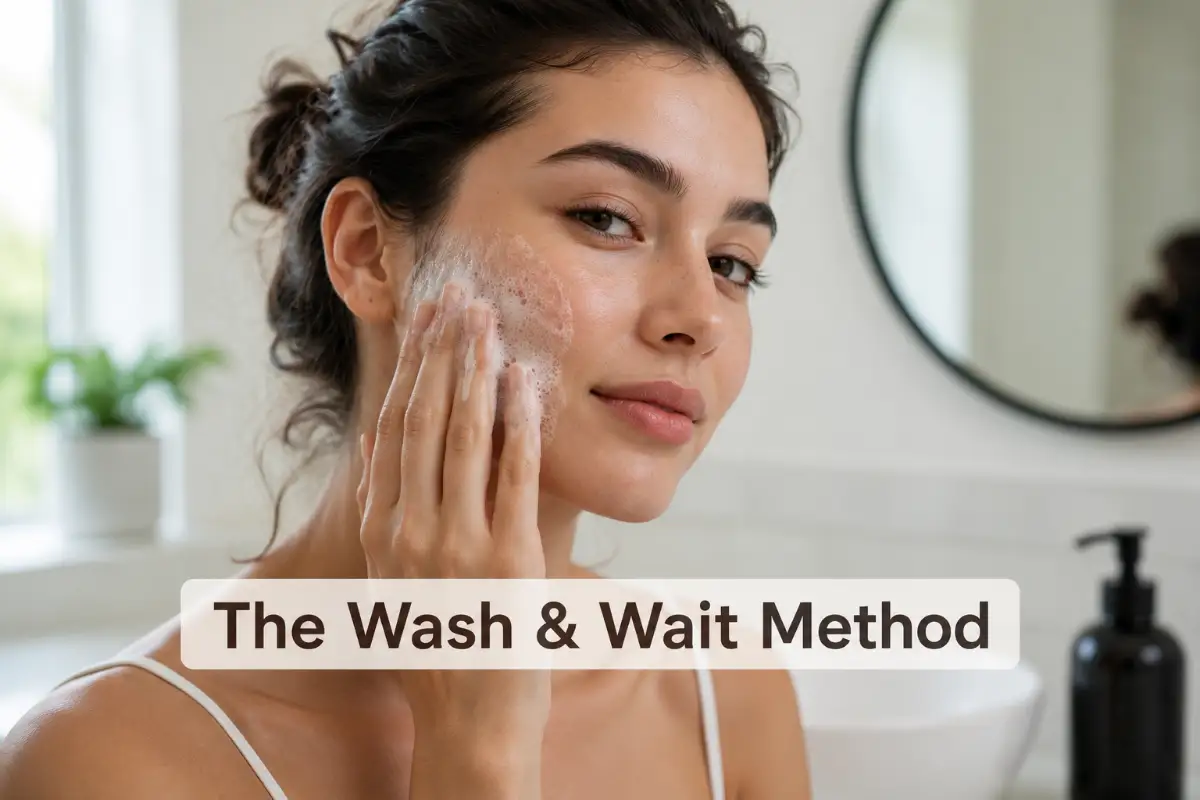
Method 1: The Bare-Faced Observation Method (Wash & Wait)
One huge mistake I made for years was washing my face three times a day because I thought I was just "oily." I later realized I actually had combination skin, and all that extra scrubbing was just making my cheeks peel while forcing my nose to produce even more grease. My best advice is to stay away from the mirror during that one-hour waiting period; if you keep touching your face to check, you’ll ruin the results and end up right back at square one.
This is the most trusted, traditional way to see how your oil glands behave naturally. The goal here is to remove all outside influences, like serums, dirt, or makeup. Then, we let your face reset to its natural state.
For this test to work properly, you need a relaxed morning or evening. You should stay indoors during the waiting period. Sweating or facing harsh winds outside will completely ruin the results of this test.
Step 1: The Gentle Cleanse
Start by washing your face with a mild, non-foaming cleanser. Do not use anything with active ingredients like Salicylic Acid or Benzoyl Peroxide. Those ingredients alter your natural oil production.
Gently massage the cleanser into your skin for about sixty seconds. Rinse thoroughly with lukewarm water. Hot water strips away your natural oils, while freezing cold water fails to remove daily dirt properly.
Step 2: The Waiting Game
Take a soft, clean towel and gently pat your face dry. Do not rub the towel aggressively against your cheeks. Rubbing causes friction and unnecessary irritation.
Now, do absolutely nothing. Do not apply toners, serums, moisturizers, or any other products. Set a timer on your phone for exactly one hour. Go read a book, watch a show, or relax.
Step 3: The Mirror Analysis
After one hour, walk up to a mirror with good natural lighting. Pay close attention to how your face feels when you make expressions. Smile widely and raise your eyebrows.
- Normal Skin: If your face feels comfortable, looks clear, and shows no excess shine or tight dryness, you are blessed with a normal type.
- Oily Skin: If you notice a visible shine forming all over your face, especially on your forehead, nose, and cheeks, you fall into the oily category.
- Dry Skin: If your face feels incredibly tight, looks dull, and shows small flaky patches when you smile, your natural oil production is low. You have a dry type.
- Combination Skin: If your nose and forehead (the T-zone) look shiny, but your cheeks feel tight or normal, you have a combination profile. This is actually the most common type in the world.
If you are a visual learner, watch this quick guide to see exactly how to perform the "wash and wait" test at home. Seeing it in action will help you get the most accurate results before you move on to the next step!
Method 2: The Blotting Paper Mapping Technique
Sometimes, looking in the mirror is not enough. If you are a visual learner and want physical proof of your oil production, this method is perfect for you.
Instead of guessing based on shine, we are going to literally map out where your face produces oil. Think of this as taking a fingerprint of your pores.
You will need a few sheets of clean facial blotting paper. If you do not have blotting paper at home, you can easily use a clean, single layer of a tissue paper or even a toilet seat cover. They absorb oil just as effectively.
Step 1: Prep and Wait
Just like the first method, you need to start with a completely clean canvas. Wash your face with a gentle cleanser and pat it dry.
Wait for one to two hours without putting anything on your face. This gives your pores enough time to start producing sebum naturally.
Step 2: The Pressing Process
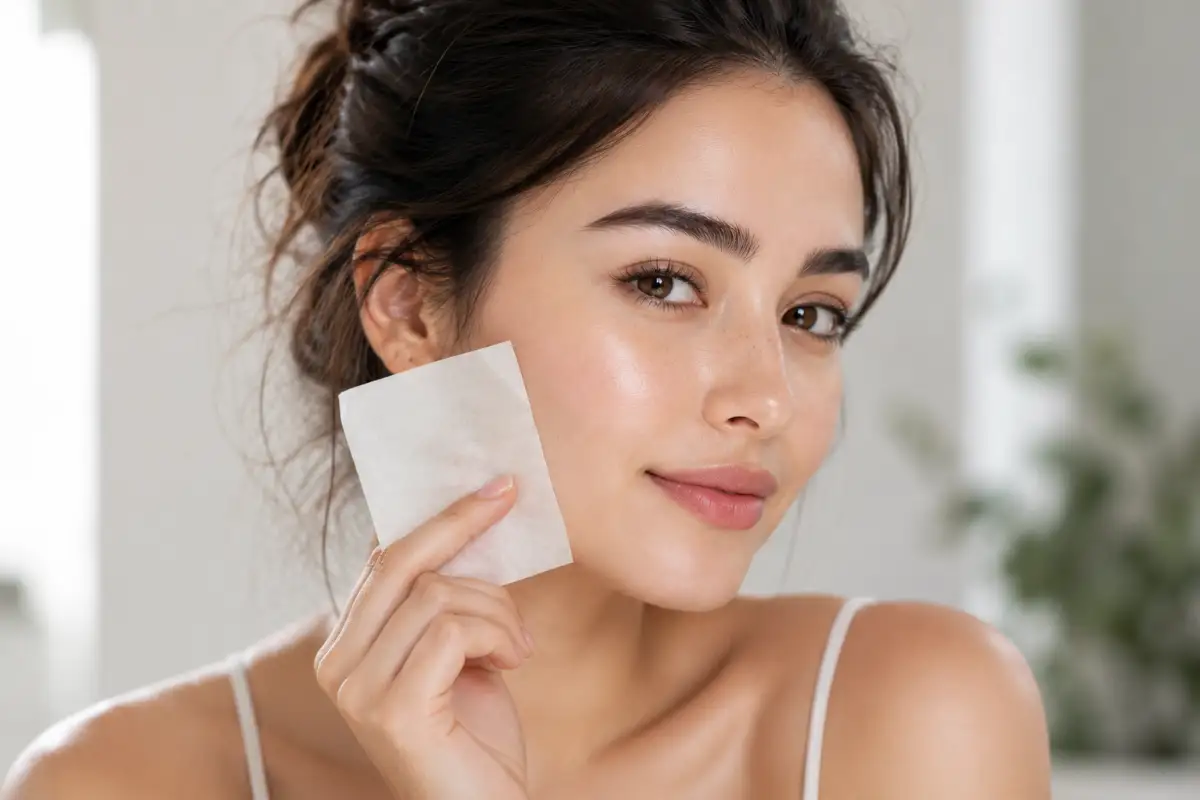
Take your blotting paper and gently press it against different areas of your face. Start by pressing a sheet flat against your forehead. Then use another piece for your nose, another for your chin, and finally, one for your cheeks.
Do not wipe or drag the paper across your face. Wiping will smear the oil and ruin the visual map. Just press firmly for a few seconds, then lift it straight off.
Step 3: Reading the Results
Now, hold the sheets of paper up to a bright light. The light will easily shine through the areas where the paper absorbed oil.
- If the paper from every part of your face is soaked in oil spots: You clearly have an oily profile. Your sebaceous glands are highly active everywhere.
- If the papers from your forehead, nose, and chin have oil, but the cheek papers are completely dry: You are looking at a textbook case of combination skin.
- If all the papers have little to no oil spots on them: Your glands do not produce much sebum at all. You definitely belong to the dry skin family.
- If there is a very faint, even amount of oil across all papers: Your oil production is perfectly balanced, meaning you have normal skin.
Method 3: The Pinch and Texture Test (Hydration vs. Oil)
This third method is incredibly helpful for solving the biggest mystery in skincare. People constantly mix up dry skin (a skin type) with dehydrated skin (a temporary condition).
Dry skin means your body does not produce enough natural oils. Dehydrated skin means your skin cells are lacking water, regardless of how much oil you produce. Yes, you can have highly oily skin that is also severely dehydrated.
Imagine a dry leaf versus a dried-out sponge. The dry leaf naturally lacks moisture and crumbles easily. The dried sponge is meant to hold water, and when it loses it, it becomes stiff but can bounce back once soaked.
Step 1: The Safe Pinch Test
Stand in front of a mirror and gently pinch the skin on your cheek or the back of your hand. You do not want to pull hard enough to cause pain. Just gently lift a small section. Hold it for about three seconds, and then let it go. Watch how quickly the skin snaps back into its original place.
Step 2: Analyzing the Snap
If the skin snaps back instantly, your hydration levels are great. The water content in your cells is high, keeping your face plump and elastic.
If it takes a moment to return to normal, or if it holds a wrinkled shape for a second, your face is crying out for water. You are dealing with dehydration. This means you need to add water-based serums to your routine immediately, not thick heavy oils.
Step 3: Checking the Texture
Run your clean fingertips lightly across your forehead and cheeks. What do you feel? If you feel rough, microscopic bumps under the surface, it usually points to a buildup of dead cells and lack of oil. If you press gently and see tiny, fine lines appear instantly like crushed tissue paper, that is a massive red flag for water loss.
Understanding this difference is a massive turning point. Many people with oily, dehydrated skin make the mistake of using harsh drying alcohols to stop the oil. This triggers the skin to panic and produce even more oil to compensate for the missing water.
By mastering these three at-home methods, you take back complete control over your routine. You stop being a victim of clever marketing and start making logical, science-based decisions for your personal health. You now have the exact data you need to build a routine that actually gives results.
Going Beyond the Basics: Expert Methods for Long-Term Skin Health
Now that you understand the basic tests, it is time to look at your skin on a much deeper level. True skin health requires you to observe how your face changes in different situations over time. According to dermatologists, managing your skin barrier is a long-term commitment, much like building a bulletproof emergency fund for your financial safety. You need a solid foundation to protect against sudden flare-ups or unexpected reactions.
Many people do a single wash test and assume their face will remain exactly the same forever. However, leading medical experts at Healthline suggest that external factors can heavily influence how your outer layer behaves from day to day. We need to look beyond the bathroom mirror to get the full, accurate picture.
If you want to stop wasting money on the wrong products, you have to treat your daily routine like a smart investment. Just as you would carefully research how to consolidate multiple debts to save your hard-earned money, you must strategically pick products that perfectly match your specific genetic data.
Let us explore some advanced observation techniques that top professionals use in their clinics. These steps will help you confirm your initial test results with absolute, undeniable certainty. By learning these advanced methods, you will never have to second-guess your daily routine again.
Always remember that the American Academy of Dermatology recommends keeping your skincare routine simple and extremely gentle. Overcomplicating things with too many strong chemicals usually leads to severe irritation and confusing results. Let us explore the pro-level secrets you can apply at home right now.
Analyzing Your Natural Pore Size Visibility
Your pores act like tiny windows into your natural oil production system. By simply observing the physical size of your pores, you can gather a massive amount of information. You do not need a magnifying glass for this; just stand near a window with bright daylight.
People with an oily profile generally have visibly larger pores scattered all across their face. Because their glands pump out a high volume of sebum, the pore walls physically stretch out to let the oil escape. If you can easily see your pores on your cheeks, forehead, and chin from a short distance, your face naturally runs oily.
On the opposite side, those with a dry profile have incredibly tight, almost invisible pores. Because their skin does not produce enough natural oil, the pores never need to stretch open. Their texture often looks very smooth, but it feels rough and lacks a natural bounce.
If you notice large, visible pores on your nose and the center of your forehead, but completely invisible pores on your outer cheeks, you have a combination profile. This is a classic map of where your face is overproducing and underproducing oil at the exact same time.
The Climate and Environment Reaction Test
Your face does not exist in a vacuum. How it reacts to different weather conditions gives you the ultimate clue about its true nature. Think about a time you traveled to a different city or experienced a sudden change in seasons.
If the winter cold instantly turns your face into a red, tight, peeling mess, you lean heavily toward a dry or highly sensitive category. Your barrier lacks the natural lipids required to lock in warmth and moisture. The cold air literally pulls the remaining water right out of your cells.
Conversely, if a humid summer day makes your face feel like a heavy, sticky oil slick within ten minutes of stepping outside, your oil glands are highly reactive. Heat naturally stimulates sebum production. Oily skin will always become unmanageable in high humidity without the right mattifying products.
If your face acts completely crazy in the winter but gets wildly greasy in the summer, you are dealing with classic combination behavior. Your routine needs to adapt slightly with the changing seasons to keep everything balanced and calm.
Tracking Your Post-Makeup Behavior
This is a fantastic real-life scenario test for anyone who wears cosmetics daily. How your foundation or concealer looks after four to six hours is a huge indicator of your base type. Makeup acts as a direct canvas over your natural oils.
If you apply a liquid foundation in the morning and notice it sliding off your nose by lunchtime, oil is breaking down the product. Excess sebum dissolves makeup incredibly fast. You might also notice your powder looking cakey and separated as the oil pushes through.
If your foundation tends to cling to tiny dry patches you did not even know you had, your face lacks basic moisture. The makeup absorbs whatever tiny bit of water is left on your surface, leaving behind a dusty, cracked finish. This is a massive warning sign for dry, dehydrated conditions.
Getting the perfect skin routine takes intense patience and avoiding bad habits. It is very much like understanding the mistakes you must avoid for personal loan approval; one wrong move can set you back for months. You must monitor your progress carefully.
Five Dangerous Skincare Mistakes That Ruin Your Progress
Identifying your specific needs is only the first half of the battle. The second half is avoiding the terrible advice floating around the internet. Many people accidentally destroy their skin barrier because they fall into common traps.
Skipping your basic evening cleanse can cause a massive breakout, and the damage compounds very quickly. It is highly similar to what happens if you miss an EMI payment; it takes a huge amount of hard work to fix the resulting mess. Let us look at the biggest pitfalls you must avoid.
1. Confusing Acne-Prone Skin with Oily Skin
This is easily the most common mistake people make. Just because you have a few pimples does not mean your entire face is oily. Acne is a specific medical condition, while oiliness is a genetic baseline.
Many people with severely dry skin get massive acne breakouts because their dry, dead skin cells clog their pores. If you treat dry, acne-prone skin with harsh products made for oily faces, you will create a disaster. Your face will become red, highly inflamed, and perfectly designed for more bacteria to grow.
2. Using Harsh Cleansers to Get a "Squeaky Clean" Feeling
If your face feels tight, squeaky, and completely stripped after washing, you are actively damaging it. That squeaky feeling means you have destroyed your acid mantle. The acid mantle is the invisible shield that keeps bad bacteria out and good moisture in.
When you strip all the oil away, your brain goes into absolute panic mode. It immediately commands your glands to produce double the amount of oil to protect your face. You end up making yourself far greasier by trying to dry out your face artificially.
3. Skipping Moisturizer Because You Feel Greasy
This logic makes sense on the surface, but it is scientifically completely wrong. People with greasy faces often think a moisturizer will just add more grease. In reality, a shiny face is often screaming out for deep water hydration.
If you skip your daily moisturizer, your cells become dehydrated. To compensate for the lack of water, your body produces excess thick sebum. Using a lightweight, oil-free gel moisturizer actually trains your body to stop producing so much unnecessary oil over time.
4. Blindly Following Viral Social Media Trends
We all love watching satisfying beauty routines online. However, putting random kitchen ingredients or highly concentrated acids on your face just because an influencer did it is extremely dangerous. What gives one person a glass-like glow might give you chemical burns.
Always remember that influencers use heavy studio lighting and beauty filters. Their real-life texture is hidden. Never buy a product without checking the ingredients against your newly discovered skin type data.
5. Ignoring How Your Diet and Sleep Affect Your Face
You cannot out-skincare a terrible lifestyle. Your skin is your body's largest organ, and it directly reflects what is happening inside your gut. Eating massive amounts of refined sugar and dairy can spike your insulin, leading to severe oil overproduction.
Similarly, missing out on deep sleep increases your cortisol levels. High stress hormones break down the collagen in your face and cause aggressive inflammation. A glowing, healthy face requires you to drink plenty of water, eat whole foods, and rest properly every single night.
Your Next Steps Toward Glowing, Healthy Skin
You now hold the exact blueprint to finally understand your face. You no longer have to stand confused in the cosmetic aisle, wondering which bottle is right for you. You have the power to test, analyze, and confirm your exact profile right from the comfort of your own bedroom.
Knowledge is only powerful if you actually use it. I strongly encourage you to take one hour tonight and try the bare-faced wash test. Take a close look at your pores tomorrow morning and note how they behave before you apply anything.
By taking these small, highly intentional steps, you are protecting your health for the long run. Your skin is completely unique to you, and it deserves to be treated with respect, patience, and true understanding. Start your observation journey today, and watch as your natural confidence begins to shine through!
Once I finally figured out my real skin profile, I stopped hiding behind heavy foundation and actually started liking my reflection again. You don't need a massive budget or 10-step routines to have great skin; you just need to listen to what your face is telling you. Please, take that hour for yourself tonight and do the wash test—your future, glowing self will thank you for it!
Disclaimer: The information provided in this article is for educational and informational purposes only. It is not intended as a substitute for professional medical advice, diagnosis, or treatment. Always seek the advice of your physician or a qualified dermatologist with any questions you may have regarding a medical or skin condition.